

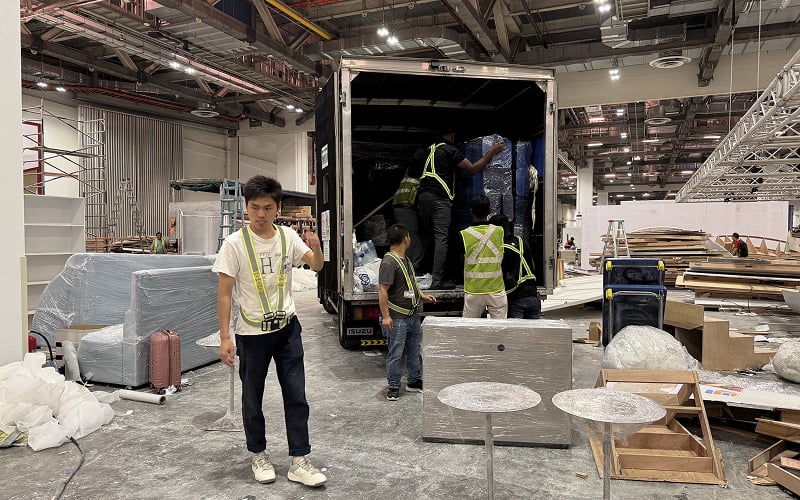
Large corporate events, conferences, and exhibitions in Singapore often take place across more than one venue. A main conference may be held at a convention centre, while related networking sessions, VIP dinners, or private showcases are hosted at nearby hotels. In these situations, event logistics planning is essential because furniture delivery has to align with loading dock access, venue schedules, service lift availability, and setup timelines.
Events hosted across convention centres and hotels often involve different operational teams, access procedures, and setup requirements. A convention centre event setup, for example, may require bulk delivery through designated loading bays, while a hotel ballroom may involve stricter service routes, guest-facing areas, or shorter access windows.
With proper event logistics planning, organisers can reduce delivery conflicts, prevent unnecessary waiting time, and ensure each space is prepared according to the programme schedule. This also helps maintain a cohesive event look across different venues, so guest-facing areas feel connected even when they are managed by separate operational teams.
Before any delivery takes place, site reviews help organisers and furniture suppliers understand how furniture will move through each venue. This is especially important for multi-location events, where each site may have different entry points, lift access, loading rules, and staging restrictions.
These checks help the delivery team plan the most efficient route into each event space before the setup day begins.
Key details to confirm may include:
For organisers arranging Expo furniture hire, these details are particularly important because exhibition halls often involve larger delivery volumes, multiple booth zones, and shared access with other contractors. Reviewing these practical requirements early allows the logistics team to allocate manpower, estimate setup time more accurately, and avoid disruptions during installation.
Convention centres and hotels usually operate on strict access windows, especially when several events are happening in the same building or district. Delivery timing should be planned around when loading docks, service lifts, holding areas, and event rooms are released for setup, not just when the furniture is ready to arrive.
A clear delivery sequence ensures that furniture arrives only when the venue is ready for installation and when other vendors have completed the work that needs to happen first.
Effective event delivery scheduling should account for AV installation, booth construction, carpeting, floral styling, catering setup, security checks, and final venue handover. In this context, event logistics planning becomes more than transport coordination. It gives each team a shared timeline, reducing congestion at loading areas and keeping the setup process organised from the first delivery to the final styling check.
Large conferences often use several areas at once, including plenary halls, breakout rooms, sponsor lounges, registration counters, media corners, and networking zones. Furniture installation should therefore be phased according to room priority and handover timing. For example, seating for a main conference hall may need to be completed first, while smaller discussion rooms may require rented chairs to be positioned later, once technical teams have cleared the space.

Clear communication is one of the most important parts of event logistics planning for multi-venue events. Organisers, furniture suppliers, venue operations teams, AV vendors, decorators, caterers, and security teams should work from updated floor plans, delivery instructions, and setup schedules. When changes arise, such as adjusted room layouts or delayed access, early communication helps the team respond quickly while protecting the overall event flow and guest experience.
Some venues may require furniture to arrive before the event space is ready for installation. In these cases, temporary staging areas help keep items organised, protected, and easy to retrieve once the room is available. This is useful for premium lounge furniture, modular display pieces, bar counters, and styled arrangements that need to be placed carefully according to the floor plan.
Clearance planning should also be considered in advance, especially when furniture needs to be dismantled or removed within a tight post-event window.
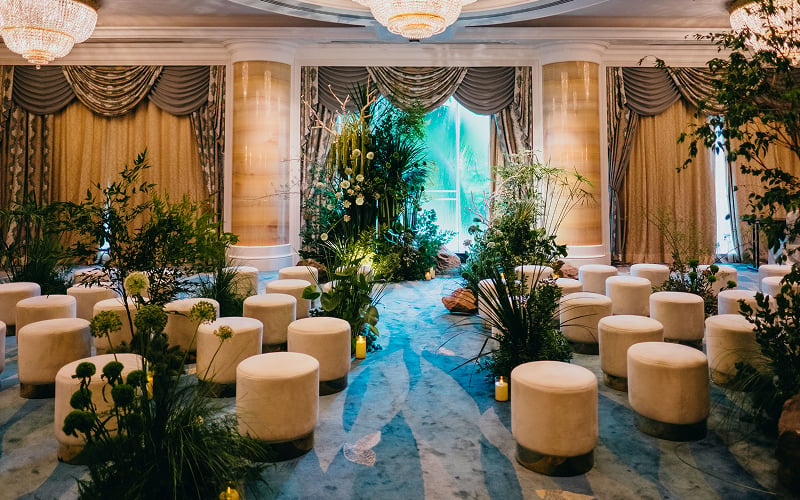
Hotels often host supporting functions during major conferences, such as welcome receptions, private dinners, post-event networking sessions, or media briefings. Effective hotel event coordination helps these spaces feel connected to the main event while still respecting each venue’s operational requirements. For hotel-based receptions or networking sessions, cocktail tables for rent, lounge seating, and bar counters should be delivered and installed according to each hotel’s access rules while maintaining a consistent event look.
Coordinating furniture delivery across convention centres and hotels requires early preparation, clear communication, and well-structured event logistics planning. When delivery schedules are aligned with venue access windows and installation timelines, organisers can reduce delays, support smoother vendor coordination, and ensure every event space is ready on time.
For events spanning multiple venues, Events Partner can work with your team to review floor plans, access requirements, and setup priorities, so each furniture arrangement is delivered, installed, and removed with care after the event.
Speak with us to plan a furniture delivery, setup, and clearance schedule that keeps your convention centre, hotel, and hospitality spaces organised, cohesive, and event-ready.



 Fleet Deployment Rates
 Payment Methods
 FAQ
FAQ