Corporate events in Singapore fail for one reason more than any other: not a weak programme, not a poor venue, but inadequate event logistics planning. The term you’ll hear most often in professional event management circles is “event operations,” but logistics is the layer beneath it all, covering every coordinated activity from venue setup to vendor scheduling to technical delivery. Understanding why event logistics can make or break your corporate event gives you the clearest possible picture of where things go wrong and, more usefully, how to stop them from doing so.
Table of Contents
Key takeaways
| Point |
Details |
| Logistics is largely invisible |
When managed well, attendees never notice it. When it fails, it becomes the only thing they talk about. |
| Timeline discipline is non-negotiable |
Mid-sized Singapore events need 6 to 12 weeks of lead time; large productions require 3 to 6 months of advance planning. |
| Scheduling buffers prevent cascades |
A single underestimated reset can delay an entire programme. Build time buffers into every vendor handoff. |
| Technology adoption requires readiness |
AI tools improve pre-event planning significantly, but only where organisational infrastructure supports them. |
| Contingency plans must be layered |
A single backup plan is not enough. Responses should vary based on the severity and duration of each failure scenario. |
The core components of event logistics that matter
In corporate event management, logistics refers to the full operational picture: coordinating every physical, technical, and human resource so they arrive at the right place, at the right time, in working condition. It is not simply “getting chairs delivered.” The role of logistics in corporate events spans venue preparation, vendor sequencing, technical infrastructure, transportation, registration systems, and run-of-show scheduling.
The impact of logistics on events is most obvious when something breaks. Smooth logistics produces on-time sessions and efficient check-ins. Breakdowns cause technical failures that become visible immediately, and those impressions are hard to reverse once they form.
The core components typically include:
- Venue logistics: access times, floor plans, setup windows, and turnaround protocols
- Vendor coordination: confirmed delivery windows, equipment checklists, and installation sequencing
- Technical setup: audio-visual systems, staging, power requirements, and backup arrangements
- Scheduling: run-of-show documents that map every activity and handoff against the clock
- Transportation: crew movements, attendee arrival flows, and supplier access routes
For Singapore-based events, corporate planning timelines are tighter than many organisers expect. Mid-sized events require 6 to 12 weeks of lead time, while large productions demand 3 to 6 months of advance planning. Venues should be secured 8 to 12 weeks before the event, and key vendors confirmed at least 6 weeks out. These are not generous buffers. They are minimum viable timelines.
Pro Tip: Build your master planning calendar backwards from the event date. Start with what needs to be in place on the day and work backwards to identify every dependency. This approach exposes gaps that forward planning routinely misses.
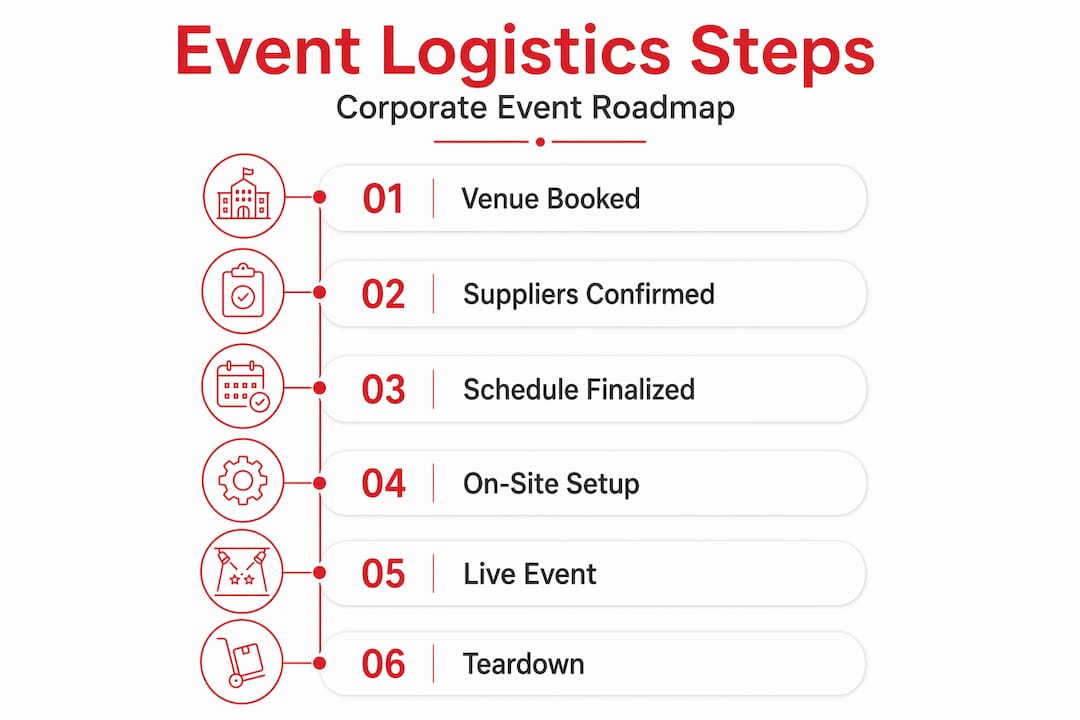
Common logistics pitfalls that derail corporate events
The most persistent challenges in event logistics are rarely dramatic. They are small, accumulated failures, each individually manageable but collectively catastrophic. Here are the four most common ones.
- Scheduling bottlenecks from underestimated reset times. A 15-minute catering reset that actually takes 25 minutes creates a visible bottleneck that ripples through your entire programme. Attendees see rushed staff, late sessions, and a flustered operation. The run-of-show is a system of constraints, and violating any single constraint cascades delays into everything that follows.
- Disconnected systems creating information gaps. When registration, scheduling, and vendor updates live in separate tools with no shared data, errors multiply. Centralising information flow into a single operational picture reduces mistakes and eliminates the stale information that causes the wrong chairs to arrive in the wrong room.
- Late venue and supplier confirmations reducing availability. Peak-season venues in Singapore book out 6 to 12 months in advance. Planners who start supplier outreach 4 weeks out face a market already committed elsewhere, forcing last-minute substitutions that rarely match the original brief.
- Underestimating the contingency requirement. Most events have a Plan B. Few have a Plan B that actually covers the scenarios that arise. Technical failures, supplier no-shows, and access delays require pre-thought responses, not improvisation under pressure.
Pro Tip: For every major vendor, document the escalation contact, the substitution protocol, and the cancellation trigger threshold before the event. You will not have time to negotiate these details on the day.
Using technology to improve event logistics
Technology has changed event planning logistics in meaningful ways, but the narrative around AI and automation is often more confident than the reality warrants. AI adds most value in pre-event planning, particularly in scheduling optimisation and supplier coordination, but adoption barriers remain significant. Resistance to change and the absence of event-specific AI tools means most organisations are still adapting general-purpose software to logistics tasks it was never designed for.
The success factors for technology adoption in event operations are:
- Infrastructure readiness: your team needs integrated data systems before AI can add value
- Integration between tools: scheduling software, vendor management, and communications must share data
- Change management: technology only works if the people using it understand and trust it
- Phased adoption: start with automating repeatable pre-event tasks before attempting real-time logistics coordination
The results of getting this right are real. At Marina Bay Sands, over 200 workflows were automated, with measurable reductions in manual delivery tasks and operational overhead. That scale of change does not happen overnight, but it demonstrates what is possible when infrastructure, tools, and people are aligned.
AI cannot replace the judgement of an experienced event logistics coordinator, particularly when real-time decisions must be made under pressure. What it can do is reduce the administrative burden in the weeks before an event, giving your team more capacity for the decisions that actually require human expertise.
For Singapore planners, the practical recommendation is to begin with centralised run-of-show software, a shared vendor status dashboard, and automated confirmation messaging. These three tools alone address the most common sources of logistics failure without requiring a complete technology overhaul.
Risk and contingency planning for operational resilience
No matter how well you plan, corporate events face operational disruptions. The question is not whether a problem will occur, but which kind. Contingency plans must be layered, with responses that vary by duration and severity. A 5-minute power interruption requires a different response from a 60-minute outage across multiple zones.
| Scenario |
Short disruption (under 15 min) |
Extended disruption (over 15 min) |
| Power failure |
Hold programme; switch to battery backup lighting |
Activate generator; communicate to attendees; assess zone impact |
| AV system failure |
Reboot and hold; use house PA |
Switch to backup system or simplified setup |
| Supplier no-show |
Substitute from emergency stock or nearby supplier |
Notify client immediately; brief MC; adjust programme |
| Access delay (venue) |
Compress setup sequence; prioritise attendee-facing areas |
Delay doors; notify attendees; adjust run-of-show |
Vendor contracts are where risk management either holds or collapses. Contracts must specify delivery windows, acceptable equipment substitutions, escalation contacts, and cancellation thresholds. A contract that does not address these scenarios leaves you negotiating under pressure during the event, which is the worst possible time to do so.
Singapore’s dense urban venue environment introduces specific logistical pressures. Shared loading bays, restricted access windows, and concurrent events in the same building can affect your setup timeline significantly. The final logistics walkthrough should happen 1 to 2 weeks before the event, specifically to identify and resolve these access constraints before they become day-of crises.
For events with sustainability requirements, the
ISO 20121:2024 framework provides a structured approach for integrating environmental and social considerations into logistics decisions throughout the event lifecycle. This is increasingly relevant for corporate clients with ESG reporting obligations.
Pro Tip: Rehearse your contingency responses. Run a brief scenario exercise with your logistics team during the final pre-event briefing. Teams that have talked through a power failure scenario once respond to it three times faster than those encountering it for the first time live.
Practical strategies for optimising event logistics in Singapore
Translating good logistics planning into on-the-ground execution requires discipline and coordination across every supplier involved. Here are the milestones that matter most for Singapore corporate events.
- 12 weeks out: Finalise venue booking, confirm access windows, and share floor plans with all suppliers
- 8 weeks out: Confirm all primary vendors in writing with delivery specifications and contact details
- 4 weeks out: Distribute draft run-of-show to all parties; collect feedback and flag conflicts
- 2 weeks out: Conduct site walkthrough; confirm loading bay access, lift dimensions, and power points
- 1 week out: Lock the run-of-show and distribute final version; confirm logistics team briefing time
- Day before: Supervise early setup where permitted; test all technical systems with a full run
Furniture logistics deserve specific attention because they directly affect how efficiently a venue can be turned around between sessions or events.
Efficient venue turnarounds depend on furniture arriving labelled by zone, with a clear placement guide that crew can follow without individual instruction at each piece.
When coordinating
furniture delivery across multiple venues, sequencing matters as much as timing. The furniture for the registration area must arrive and be placed before the crew moves to the main hall. That sequencing has to be explicitly mapped, not assumed.
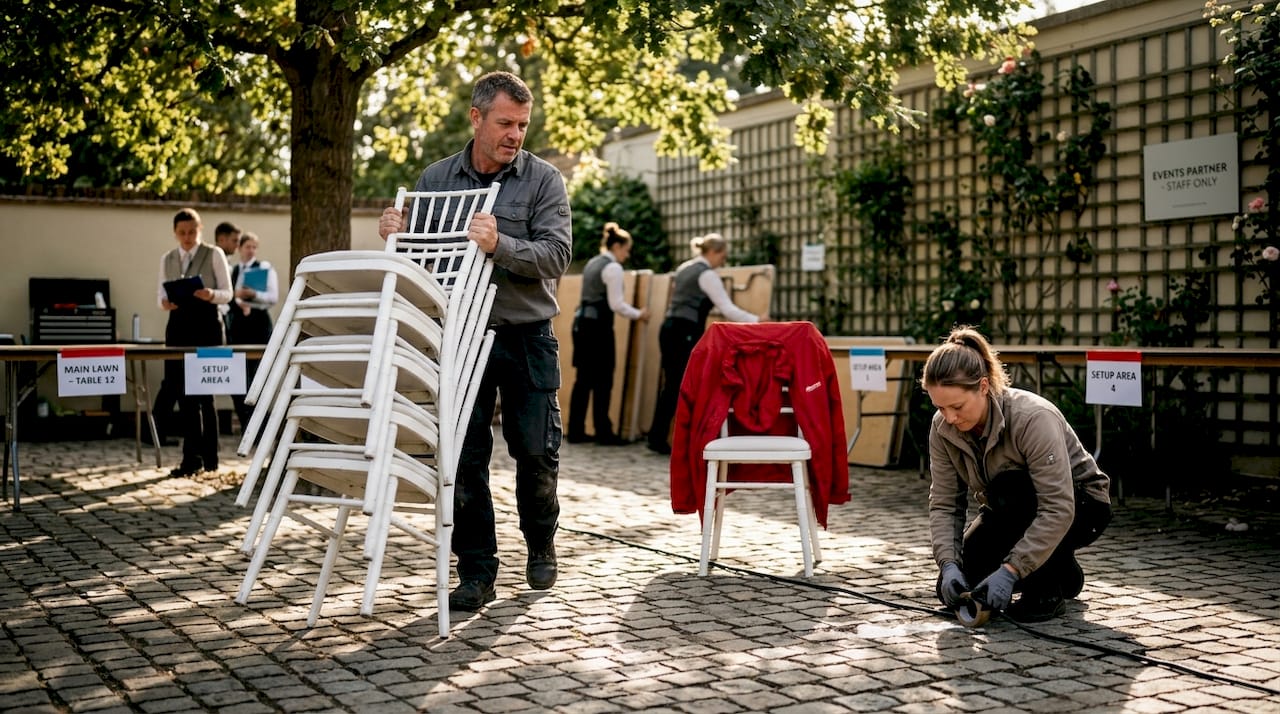
The visible difference between a well-organised and a poorly organised event often comes down to small logistics details. Chairs that are consistently spaced, signage that is correctly positioned, and registration tables that are set up before the first attendee arrives. These details do not happen by accident. They happen because someone mapped them into the plan and held the team to it.
What I’ve learned from years of event logistics work
From where I stand, the most persistent myth in this industry is that good event logistics is about solving problems. It is not. It is about building a system so complete that problems either do not occur, or resolve themselves before attendees notice.
I’ve seen events fall apart not because of bad luck but because of optimism. Planners who assumed a vendor would arrive on time without confirming. Teams who assumed reset would happen smoothly without testing it. Clients who assumed the backup power supply was “handled” without verifying the specification.
What technology cannot solve, even in 2026, is the coordination judgement that comes from knowing your venue, your suppliers, and your team. Software can flag a scheduling conflict, but it cannot read the room when a keynote speaker is running 10 minutes late and decide whether to start the next session, hold, or adjust. That is still a human decision.
My honest advice to any corporate event planner in Singapore: start earlier than you think you need to, document more than you think is necessary, and treat the logistics walkthrough as the most important meeting on your pre-event calendar. The events that look effortless from the outside are the ones where someone did exhausting work behind the scenes.
The
event planning considerations for regional brands entering Singapore are a useful reminder that local knowledge matters. Logistics that works in another market does not automatically transfer here.
— Events
How Events Partner supports your event logistics in Singapore
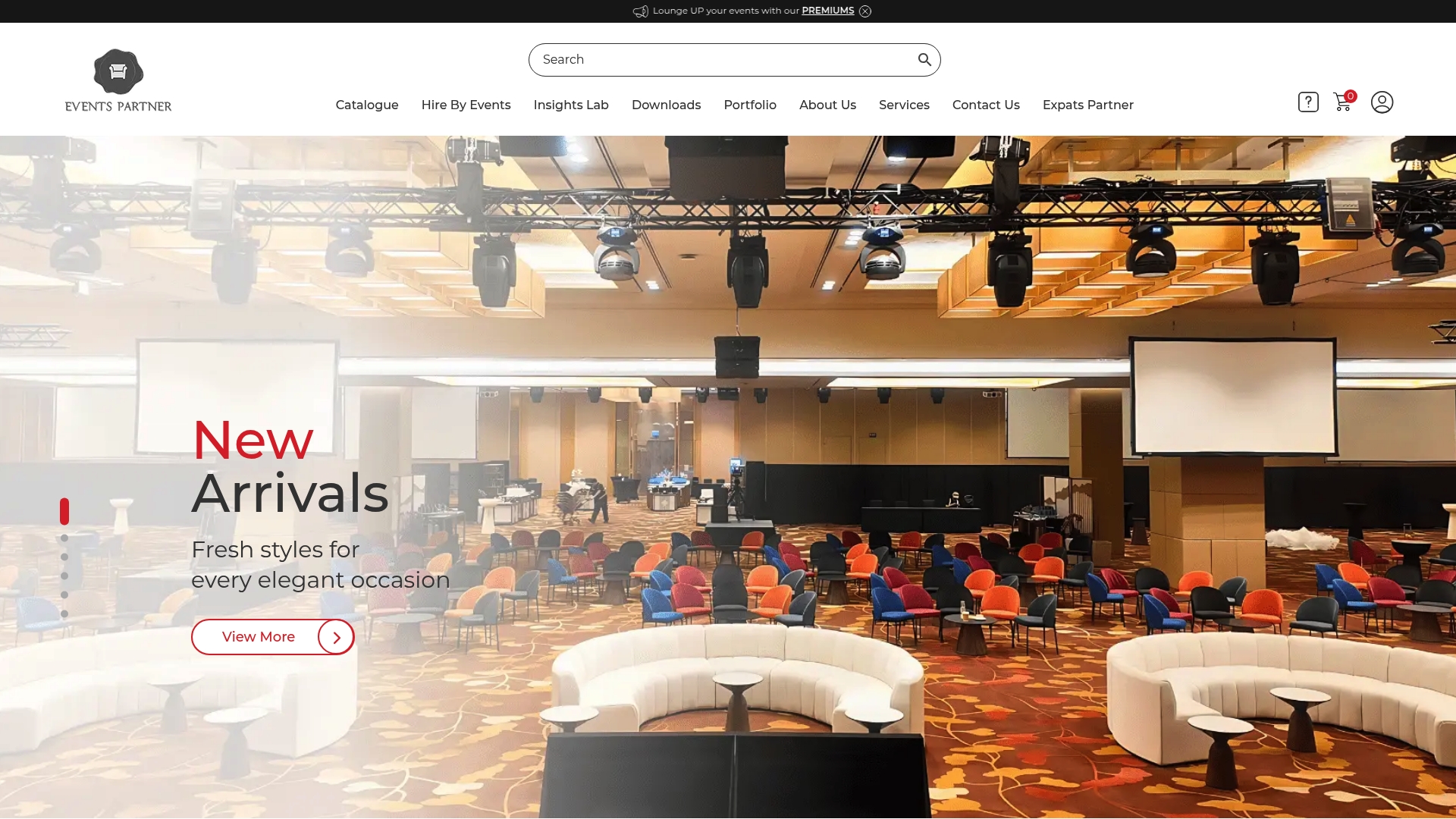
Events Partner works with corporate event planners across Singapore as a furniture infrastructure partner, handling the physical logistics that too many teams leave to chance. From
corporate event furniture rental for conferences and annual dinners to specialised setups for hotel ballrooms and exhibition halls, Events Partner provides real inventory, transparent pricing, and delivery coordinated to your run-of-show timeline.
The practical difference matters. When furniture arrives labelled by zone with a placement guide, your setup crew moves faster and makes fewer errors. When a supplier understands venue access constraints in Singapore, the loading bay conversation happens in advance, not at 7am on event day.
Events Partner also offers
conference furniture rental and
hotel event furniture rental for planners managing multi-session or multi-day programmes. If you are planning a corporate event in Singapore and want a logistics partner who understands what you are up against, get in touch.
FAQ
What is event logistics in corporate event management?
Event logistics refers to the coordination of all physical, technical, and operational resources required to execute a corporate event. This includes venue setup, vendor scheduling, transportation, technical infrastructure, and run-of-show management.
How far in advance should I plan event logistics for a Singapore corporate event?
Mid-sized events require at least 6 to 12 weeks of lead time, while large-scale productions need 3 to 6 months. Peak-season venues can book out 6 to 12 months in advance, so earlier planning reduces risk significantly.
What are the most common event logistics mistakes?
The most common mistakes are underestimating reset and turnaround times, using disconnected systems that create information gaps, confirming vendors too late, and having a contingency plan that does not cover the actual scenarios that arise.
How does AI help with event planning logistics?
AI is most effective in pre-event planning tasks such as scheduling optimisation and supplier coordination. However, successful adoption depends on having integrated data infrastructure and organisational readiness, not just the software itself.
Why does furniture logistics matter for corporate events?
Furniture logistics affects how quickly and accurately a venue can be set up and turned around. When furniture arrives labelled by zone with clear placement guides, setup is faster, errors are fewer, and the attendee experience is noticeably better from the moment doors open.
Recommended






 Fleet Deployment Rates
 Payment Methods
 FAQ
FAQ