Restaurant event furniture rental: a singapore planner’s guide
June 17, 2026
Restaurant event furniture rental is the short-term hiring of tables, chairs, and specialised pieces designed to create comfortable, functional, and stylish environments for events held at restaurants and similar venues. Known in the industry as event furniture hire, this practice covers everything from banquet seating and cocktail tables to lounge sofas and bar counters. Rather than purchasing furniture outright, event planners in Singapore rent exactly what they need for a specific occasion, return it after the event, and avoid the costs of storage and maintenance. Whether you are organising a corporate dinner at a Marina Bay restaurant, a product launch at a hotel ballroom, or a wedding reception at a private dining space, understanding restaurant event furniture hire is the foundation of smart event planning.
What is restaurant event furniture rental and what pieces are commonly used?
Restaurant event furniture rental is defined as the short-term rental of event-ready furniture such as dining tables, banquet seating, cocktail tables, bars, and lounge seating to create event layouts without permanent purchase or storage. This definition matters because it sets the scope: you are not renting office chairs or café stools. You are hiring purpose-built pieces designed to perform under event conditions, look polished in photographs, and hold up through a full evening of use.
The most commonly rented pieces for restaurant events fall into four categories.
Dining and banquet furniture: Round dining tables, rectangular banquet tables, Tiffany chairs, cross-back chairs, and padded banquet chairs. These form the core of any sit-down dinner or gala setup.
Cocktail and bar furniture: Poseur tables, bar stools, bar counters, and high cocktail tables. These are standard for networking receptions, product launches, and pre-dinner drinks areas.
Lounge furniture: Modular sofas, armchairs, ottomans, and low coffee tables. Lounge pieces create informal conversation zones within a larger event space.
Functional and accent pieces: Registration desks, rostrums, display plinths, and buffet tables. These support the operational flow of an event rather than guest seating.
Different events call for different combinations. A corporate dinner at a Raffles Hotel ballroom typically centres on round dining tables with banquet chairs, supplemented by a cocktail reception zone near the entrance. A product launch at a restaurant in Orchard Road might prioritise lounge seating and poseur tables to encourage mingling. A wedding solemnisation at a garden restaurant often blends Tiffany chairs for ceremony seating with lounge clusters for the reception.
Customisation options extend beyond furniture type. Rental catalogues in Singapore typically offer pieces in a range of finishes: white, black, natural wood, and metallic tones. Fabric choices for chair cushions and sofa upholstery allow planners to match a brand colour palette or wedding theme. This flexibility is precisely why selecting the right furniture for each event zone is worth careful thought before confirming any order.
Pro Tip:Choose furniture styles that complement the restaurant’s existing interior rather than competing with it. A sleek modern venue suits ghost chairs and chrome poseur tables; a heritage shophouse space pairs better with natural wood and rattan accents.
How does the event furniture rental process work?
The full rental workflow covers four key stages: planning and furniture selection, scheduling delivery and venue access, on-site setup using layouts and placement notes, and breakdown and collection after the event. Each stage has its own requirements, and skipping steps in any one of them is the most common cause of last-minute problems.
Planning and selection. Start with your confirmed guest count, event format, and venue floor plan. Decide which furniture zones you need: dining, cocktail, lounge, buffet, and registration. Share these details with your rental supplier early so they can recommend quantities, flag any stock availability issues, and provide an accurate quote.
Delivery scheduling and venue access. Delivery success depends on venue access and timing discipline, with better outcomes when schedules align with venue hours and detailed floor plans. In Singapore, venues such as hotel ballrooms and convention centres at Marina Bay Sands or Suntec City have strict loading bay windows and lift access rules. Confirm these constraints with the venue operations team before your rental supplier finalises the delivery schedule.
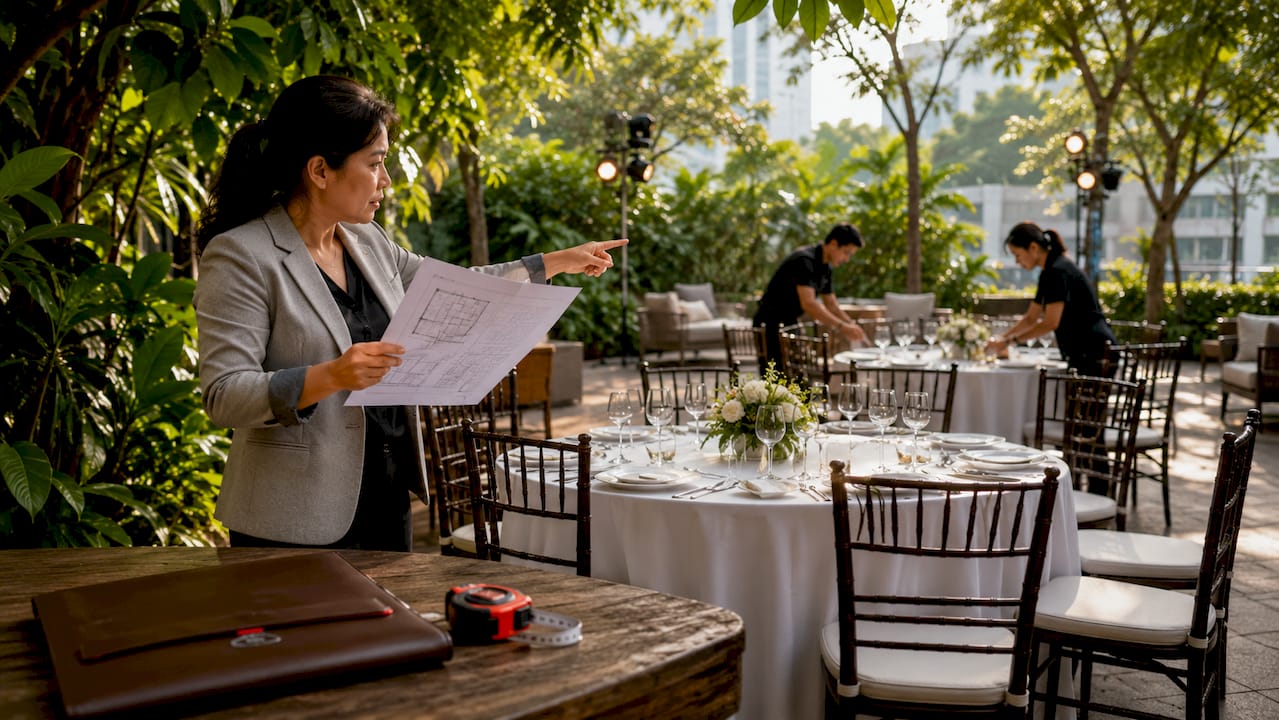
On-site setup and furniture placement. Written placement notes tied to floor plans reduce setup errors and coordinate furniture with catering, floral, branding, and AV teams effectively. A clear, annotated floor plan shared with every vendor on-site prevents the situation where tables are moved after the AV team has already run cables underneath them.
Breakdown and collection. After the event, the rental supplier returns to dismantle and collect all pieces. Confirm the collection window with both the supplier and the venue in advance. Venues often charge overtime fees if the space is not cleared by a set time.
One logistical detail that catches planners off guard is floor protection. Handling heavy event furniture requires specialised crew methods and equipment to protect delicate flooring and prevent setup delays, especially in venues with frequent reconfigurations. Restaurants with parquet floors, marble tiles, or carpeted ballrooms may require felt pads, furniture dollies, or protective boards. A professional rental partner will raise this proactively. If yours does not, ask.
Pro Tip:Send your annotated floor plan to the rental supplier at least five working days before the event. This gives them time to pre-stage furniture in delivery order, which cuts on-site setup time significantly.
What factors influence the cost of event furniture rental?
Rental pricing includes furniture cost plus operational factors such as labour, transport distance, venue access, customisation, and timing, leading to varied quotes even for similar orders. Two planners renting the same number of chairs for events on the same weekend can receive very different quotes depending on where their venues are, when access is available, and how complex the setup is.
The table below outlines the main cost components and their typical contribution to a total rental quote.
Cost Component
Typical Contribution to Total Quote
Notes
Furniture hire fee
40–55%
Varies by style, material, and quantity
Labour (setup and teardown)
25–40%
Higher for complex layouts or tight access windows
Transport and logistics
10–20%
Distance, vehicle size, and number of trips
Customisation and accessories
5–15%
Fabric upgrades, branded covers, special finishes
Venue-specific surcharges
5–10%
Overtime, restricted access, floor protection
Labour is the cost component most planners underestimate. At 25–40% of the total quote, it reflects the skilled crew time needed to move, place, and dress furniture correctly. That figure rises when venues have restricted access windows, require multiple lift trips, or need furniture placed in a specific sequence to accommodate other vendors.
Seasonality also affects pricing. December and the Chinese New Year period are peak seasons for corporate dinners and gala events in Singapore. Rental suppliers are in high demand, and last-minute bookings during these periods often attract premium rates or limited availability. Booking at least six to eight weeks ahead for peak-season events gives you better pricing and more furniture options.
To avoid hidden costs, ask your supplier for a fully itemised quote that separates furniture hire, labour, transport, and any surcharges. Reputable suppliers in Singapore will provide this without hesitation. If a quote arrives as a single lump sum with no breakdown, request the detail before signing anything.
What best practices optimise layout, flow, and guest experience?
Effective event furniture rental includes designing multiple furniture zones to support event flow, not just providing enough chairs and tables for headcount. This is the insight that separates experienced planners from those who treat furniture as a numbers exercise.
The following practices consistently produce better guest experiences at restaurant events in Singapore.
Zone your space deliberately. Design distinct areas for dining, cocktail networking, bar service, buffet stations, and lounge conversation. Clear zones prevent guests from clustering in one area and leaving others empty.
Book a seating buffer. Booking 10–15% extra chairs is common best practice. This covers last-minute additions, broken pieces, and the reality that guests rarely sit in perfectly even numbers at each table.
Plan circulation paths. Leave at least 1.2 metres between table rows for comfortable movement. In Singapore venues with fixed pillars or irregular floor plans, map these paths on your floor plan before finalising furniture placement.
Coordinate with all vendors before setup day. Furniture placement affects where caterers position their stations, where AV teams run cables, and where floral arrangements sit. A shared floor plan reviewed by all vendors before setup day prevents conflicts on the day itself.
Protect the venue. Use felt pads under all furniture legs on polished or delicate floors. For heavy pieces such as bar counters or large dining tables, confirm with the venue whether protective boards are required under load-bearing areas.
White-glove logistics services relieve host teams by ensuring timely delivery and professional setup of cocktail tables, lounge furniture, and bars, letting hospitality staff focus on service. This is particularly relevant for restaurant events where the venue’s own team is simultaneously managing kitchen preparation and front-of-house service.
Pro Tip:Schedule furniture delivery and setup to finish at least two hours before guest arrival. This gives you time to walk the space, adjust any placements, and resolve issues without guests present.
Key takeaways
Successful restaurant event furniture rental depends on matching the right furniture types to each event zone, managing logistics with precision, and treating layout design as a guest experience decision rather than a headcount calculation.
Point
Details
Define your furniture zones early
Plan dining, cocktail, lounge, and bar areas before selecting quantities or styles.
Book a seating buffer
Order 10–15% more chairs than your confirmed guest count to cover last-minute changes.
Itemise your quote
Request a breakdown of furniture hire, labour, transport, and surcharges to avoid surprises.
Share annotated floor plans
Send placement notes to all vendors before setup day to prevent on-site conflicts.
Confirm venue access details
Align delivery windows with venue loading bay rules and lift access schedules in advance.
What we have learnt from furniture rental at singapore restaurant events
Working across corporate dinners, gala evenings, product launches, and wedding receptions at Singapore venues has taught us one consistent lesson: the planners who get the best results treat furniture rental as a design and logistics decision made together, not separately.
The most common mistake we see is planners finalising their guest list and then ordering furniture to match the headcount, without thinking about how guests will actually move through the space. A restaurant venue with 150 guests seated at round tables but no defined cocktail zone or lounge area will feel static and crowded at the bar. Adding even a small cluster of poseur tables and lounge seating near the entrance changes the entire energy of the room.
Singapore venues present specific challenges that planners elsewhere do not face. Loading bay access at hotels along Orchard Road and the CBD is often restricted to early morning or late evening windows. Convention spaces at Suntec City and Marina Bay Sands have strict vendor coordination protocols. Restaurants in heritage buildings in Chinatown or Tanjong Pagar may have narrow staircases and no lift access at all. A rental partner who knows these venues and has worked in them before is worth more than a slightly lower quote from a supplier who does not.
We also believe strongly in the value of full-service rental, where the supplier handles delivery, setup, and teardown rather than leaving furniture at the loading bay for the planner’s team to manage. For corporate event setups in particular, the planner’s energy on event day should go towards guests and programme management, not furniture logistics. A reliable rental partner removes that burden entirely.
— Events Partner
Plan your restaurant event with events partner
Events Partner provides event furniture rental in Singapore for the full range of restaurant and hospitality events, from intimate private dining setups to large-scale gala dinners and corporate receptions. The catalogue covers dining tables, banquet chairs, cocktail tables, lounge furniture, bar counters, and functional pieces such as rostrums and registration desks.
Every rental includes transparent, itemised pricing with no hidden fees, full delivery and setup by an experienced crew, and teardown and collection after your event. The team works with planners to review floor plans, advise on furniture quantities, and coordinate with venue operations teams on access and timing.
Whether you are planning a product launch at a restaurant in the CBD or a wedding reception at a garden venue, Events Partner is ready to support your setup from first enquiry to final collection. Reach out for a tailored quote and let the team handle the furniture so you can focus on running a great event.
FAQ
What is restaurant event furniture rental?
Restaurant event furniture rental is the short-term hire of tables, chairs, lounge pieces, and bar furniture to create event-ready layouts at restaurants and similar venues. Planners rent exactly what they need for a specific occasion and return it after the event, avoiding the cost of purchase and storage.
How far in advance should i book event furniture rental in singapore?
Book at least four to six weeks ahead for standard events, and six to eight weeks ahead for peak periods such as December and Chinese New Year. Early booking secures your preferred furniture styles and allows time to finalise floor plans and venue access coordination.
What is included in a full-service event furniture rental?
A full-service rental covers furniture hire, delivery to the venue, on-site setup by a trained crew, and teardown and collection after the event. Reputable suppliers in Singapore provide itemised quotes that separate furniture, labour, and transport costs.
How do i avoid hidden costs in my furniture rental quote?
Request a fully itemised quote that lists furniture hire fees, labour charges, transport costs, and any venue-specific surcharges separately. A transparent supplier will provide this breakdown without prompting.
Can event furniture be customised to match my event theme?
Most rental catalogues offer furniture in multiple finishes, colours, and upholstery options. Planners can select pieces that match a brand colour palette, wedding theme, or venue interior to create a cohesive look across all event zones.


 The table below outlines the main cost components and their typical contribution to a total rental quote.
 Whether you are planning a product launch at a restaurant in the CBD or a wedding reception at a garden venue, Events Partner is ready to support your setup from first enquiry to final collection. Reach out for a tailored quote and let the team handle the furniture so you can focus on running a great event.



 Delivery Fees
 Payment Methods
 FAQ
FAQ