What to look out for from venues when organising your event
July 5, 2026
Venue selection is the single most consequential decision in event planning. What to look out for from venues when organising your event goes well beyond aesthetics: location, usable capacity, technical infrastructure, pricing transparency, and the quality of the venue team all directly affect whether your event runs smoothly or unravels on the day. Get these five factors right, and every other planning decision becomes easier. Miss one, and the consequences show up in your budget, your guest experience, and your reputation.
What to look out for from venues: location and accessibility
Location is not just a convenience factor. For events in Singapore, proximity to MRT stations, bus interchanges, and car parks determines how many guests actually arrive on time. A venue that looks ideal on paper but sits 15 minutes from the nearest MRT will generate complaints before the event even begins.
Assess the pedestrian route from the nearest transport node to the venue entrance. Is it covered? Is it clearly signposted? For evening events at Marina Bay or Orchard Road, foot traffic and road closures can affect arrival times significantly. If your guest list includes international delegates or VIPs, confirm whether the venue is within a reasonable distance of major hotels.
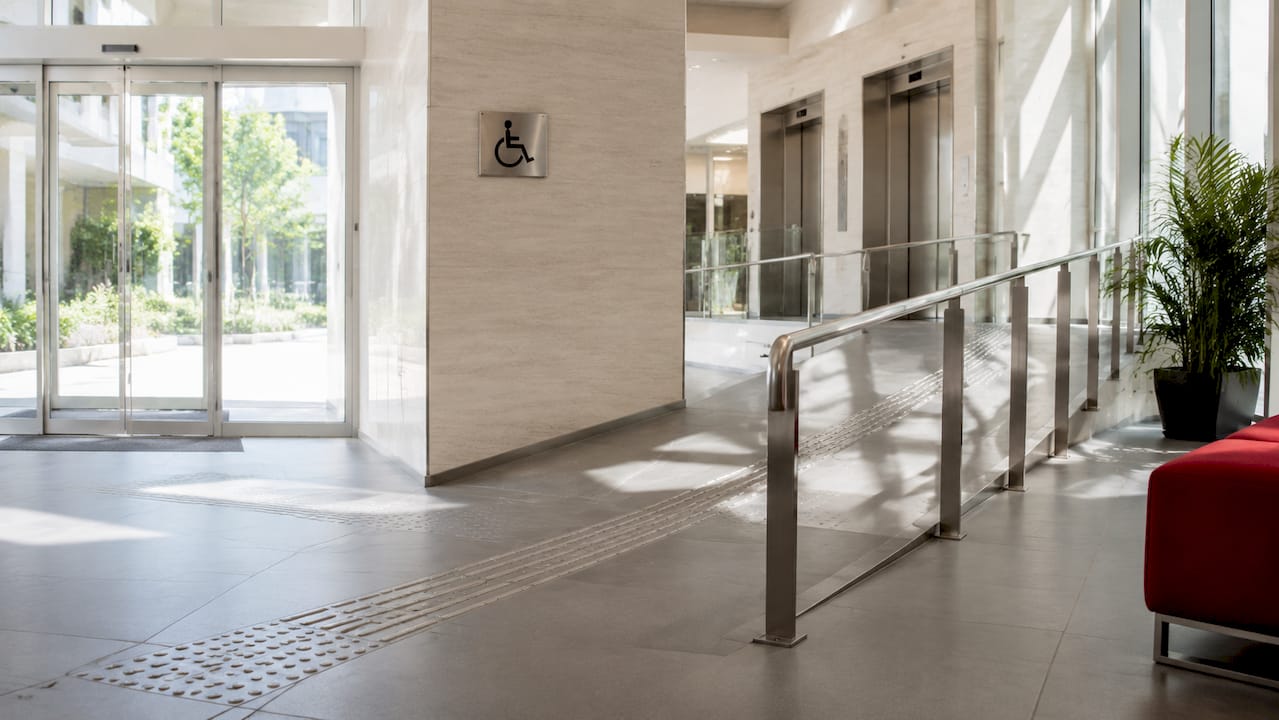
Accessibility for all attendees is non-negotiable. Confirm that lifts, ramps, and accessible toilets meet Singapore’s Building and Construction Authority standards. Freight and dock access also matters: poor load-in paths increase crew time and costs significantly. Check these routes during your site visit, not after you have signed the contract.
Pro Tip:Walk the full guest arrival route yourself, from the MRT exit to the event entrance, at the same time of day your event will run. You will spot issues that no floor plan reveals.
Surrounding amenities add practical value. Venues near hotels, restaurants, and convenience stores reduce the logistical burden on your team and give guests options before and after the event.
How to assess venue capacity and layout flexibility
Advertised capacity figures are almost always misleading. Usable capacity is typically 20–30% lower than the maximum quoted, once you account for staging, AV equipment, catering stations, and circulation space. A ballroom listed at 500 theatre-style may comfortably seat 350 once your production setup is in place.
Always request floor plans tailored to your specific event format. A conference layout with a central stage, breakout tables, and a registration desk uses space very differently from a cocktail reception or a gala dinner. Ask the venue to overlay your setup onto their floor plan before you commit.
Breakout rooms, pre-function areas, and service corridors matter as much as the main hall. For multi-session conferences at venues like Suntec City Convention Centre or Marina Bay Sands Expo, the flow between spaces directly affects pacing and guest experience. A venue that cannot offer a separate registration area, for example, creates bottlenecks that slow down your entire programme.
Layout type
Capacity impact
Key consideration
Theatre style
Highest capacity
Reduces once staging and AV added
Banquet rounds
30–40% lower than theatre
Requires wider circulation paths
Cocktail standing
Flexible but density-dependent
Furniture placement affects flow
Classroom style
Moderate capacity
Tables reduce numbers significantly
Pro Tip:Ask the venue for photos or case studies of events with a similar format to yours. Seeing how the space actually looks when set up for your event type is far more useful than a blank floor plan.
Effective capacity assessment requires accounting for staging, AV, and circulation. Planners who skip this step routinely discover on setup day that the room is too small for their intended layout.
What technical and infrastructure features should you verify?
Technical infrastructure surprises are the most expensive and common problems in event production. Request a formal technical specification sheet from every venue you shortlist. This document should confirm power load capacity, internet bandwidth, rigging points, and the location of power outlets. Verbal briefings are not sufficient.
During your site visit, run through the following checks:
Power load capacity. Confirm the total available load in kilowatts and identify which circuits serve the stage, AV, and catering areas. Overloaded circuits cause failures mid-event.
Internet and connectivity. Test upload and download speeds on-site. For hybrid events with live streaming, confirm whether the venue provides a dedicated line or shared bandwidth.
Audiovisual equipment. Many venues quote “full AV included” but only provide basic equipment. LED walls, multi-zone audio, and confidence monitors are often charged as extras. Get a written list of what is included.
Rigging and ceiling load. If you plan to hang banners, lighting rigs, or screens, confirm the ceiling height and rated load capacity. Some venues prohibit rigging entirely.
Back-of-house tech support. Confirm whether a dedicated technician is on-site during your event or whether support is remote. Strong technical support is often the difference between smooth production and costly disruptions.
Acoustics and sound bleed. Run a sound test during your site visit. In venues with adjacent function rooms, sound bleed between spaces is a common and underestimated problem.
Hybrid event capability deserves special attention. If your event includes a live stream or virtual audience, confirm that the venue has experience supporting this format and that the bandwidth is dedicated, not shared with other tenants.
How to review pricing, contracts, and service agreements
Pricing transparency separates reliable venues from problematic ones. Venue hire fees should represent 25–35% of your total event budget. If the venue fee alone exceeds 35%, your remaining budget for production, catering, and furniture will be under pressure from the start.
Hidden charges are the most common source of budget overruns. Before signing, check for:
Overtime fees. What is the per-hour charge if your event runs beyond the contracted end time?
GST and service charges. Singapore venues typically add 9% GST. Some also add a service charge on top of the base hire fee.
Cleaning and security deposits. These are often listed separately and not included in the headline quote.
Exclusivity clauses. Some venues require you to use their in-house catering or AV suppliers, which removes your ability to negotiate on those costs.
Cancellation and postponement penalties. Understand the penalty structure at 90, 60, and 30 days out.
A structured four-stage evaluation covering your event brief, shortlisting, site visit, and contract review reduces the risk of missing these charges. Planners who skip straight from shortlisting to signing routinely encounter surprise costs.
Request a fully itemised quote that separates the room hire, equipment, staffing, and any compulsory add-ons. Compare this against your budget line by line. For guidance on identifying hidden charges in vendor agreements, the Events Partner article on avoiding hidden costs offers a practical framework that applies equally well to venue contracts.
Transparent pricing practices are a reliable signal of a trustworthy supplier. Venues that resist providing itemised quotes are worth approaching with caution.
Why collaborative venue partnerships matter
The venue team you work with is as important as the space itself. The best venue partnerships demonstrate flexibility and align with your event brief rather than offering static packages. A venue that adapts its space, timing, and services to your vision reduces planning stress and improves the final outcome.
When evaluating the venue team, look for:
A single, named point of contact who attends your site visit and remains available through to event day.
Willingness to accommodate custom requests, such as adjusted room configurations, extended setup windows, or supplier access outside standard hours.
Clear communication response times. A venue that takes three days to reply to a quote request will not perform better under event-day pressure.
Experience with events of a similar scale and format to yours. Ask for references from recent clients.
Proactive problem-solving. Collaborative venue teams flag potential issues before they become your problem, rather than waiting for you to ask.
For advice on identifying vendors who genuinely support your event brief, the Events Partner guide on finding the right vendor covers the key questions to ask and the red flags to watch for.
Objective, structured assessments prevent planners from choosing venues based on familiarity or aesthetics alone. A scoring framework that rates each venue on location, capacity, technical capability, pricing, and team quality produces a defensible, consistent decision.
Key takeaways
Successful venue selection requires verifying location, usable capacity, technical infrastructure, pricing transparency, and team quality before committing to any contract.
Point
Details
Usable capacity is lower than advertised
Account for staging, AV, and circulation; usable space is typically 20–30% less than the quoted maximum.
Request a technical specification sheet
Confirm power load, internet bandwidth, and rigging points in writing to avoid costly surprises on event day.
Venue fees should stay within 25–35% of budget
Exceeding this threshold leaves insufficient budget for production, catering, and furniture.
Check for hidden charges before signing
Overtime fees, GST, cleaning deposits, and exclusivity clauses are common sources of budget overruns.
Evaluate the venue team, not just the space
A named contact, fast response times, and flexibility to adapt are reliable indicators of a strong venue partner.
What experience has taught us about venue selection
The most expensive mistakes in venue selection rarely involve the obvious factors. Planners spend hours comparing room sizes and catering menus, then overlook the technical specification sheet entirely. I have seen events derailed by a single circuit overload because nobody confirmed the power load capacity in advance. That kind of problem costs far more to fix on the day than it would have cost to verify during the site visit.
The other pattern I see repeatedly is planners choosing venues based on how the space looks in photos rather than how it functions under event conditions. A beautiful atrium with a glass ceiling creates lighting problems for presentations. A heritage shophouse with narrow corridors makes furniture delivery a logistical challenge. Aesthetics matter, but they should come after logistics, not before.
The most reliable approach is a structured scoring framework applied consistently across every shortlisted venue. Rate each venue on the same criteria, in the same order, using the same questions. This removes the subjective pull of a venue that simply “feels right” and keeps your decision grounded in what actually affects your event’s outcome.
Finally, build the relationship with the venue team early. The planners who get the best results are the ones who treat the venue team as a genuine partner rather than a supplier to manage. Open communication, early briefings, and a willingness to flag concerns honestly on both sides produce better events than any contract clause ever will.
— Events Partner
Planning your venue setup with Events Partner
Once you have confirmed your venue, the next challenge is furnishing it to match your event format and guest experience goals. Events Partner provides corporate event furniture rental across Singapore, covering conferences, exhibitions, gala dinners, product launches, and networking events. The range includes modern seating, cocktail tables, lounge furniture, rostrums, and display pieces, all available with transparent pricing and reliable delivery.
For planners working across multiple venue types, the full event furniture rental catalogue covers every event scale and layout. Events Partner coordinates directly with your venue team on delivery windows, setup logistics, and collection, so you can focus on running the event rather than managing the furniture.
FAQ
What are the most important venue features to check first?
Location and accessibility, usable capacity, and technical infrastructure are the three most critical factors. Verify these during a structured site visit before reviewing pricing or signing any agreement.
How much of my event budget should go to venue hire?
Venue hire fees should represent no more than 25–35% of your total event budget. Exceeding this threshold reduces the budget available for production, catering, and furniture.
Why is advertised venue capacity often misleading?
Venues quote maximum capacity for theatre-style seating with no production setup. Once staging, AV equipment, and circulation space are added, usable capacity is typically 20–30% lower than the advertised figure.
What should a venue technical specification sheet include?
A technical specification sheet should confirm power load capacity in kilowatts, internet bandwidth, rigging points, ceiling height, and the location of power outlets. Request this document in writing, not as a verbal briefing.
What questions should I ask the venue team before booking?
Ask for a named point of contact, their response time commitment, examples of similar events they have hosted, their policy on external suppliers, and the full list of charges not included in the headline hire fee.


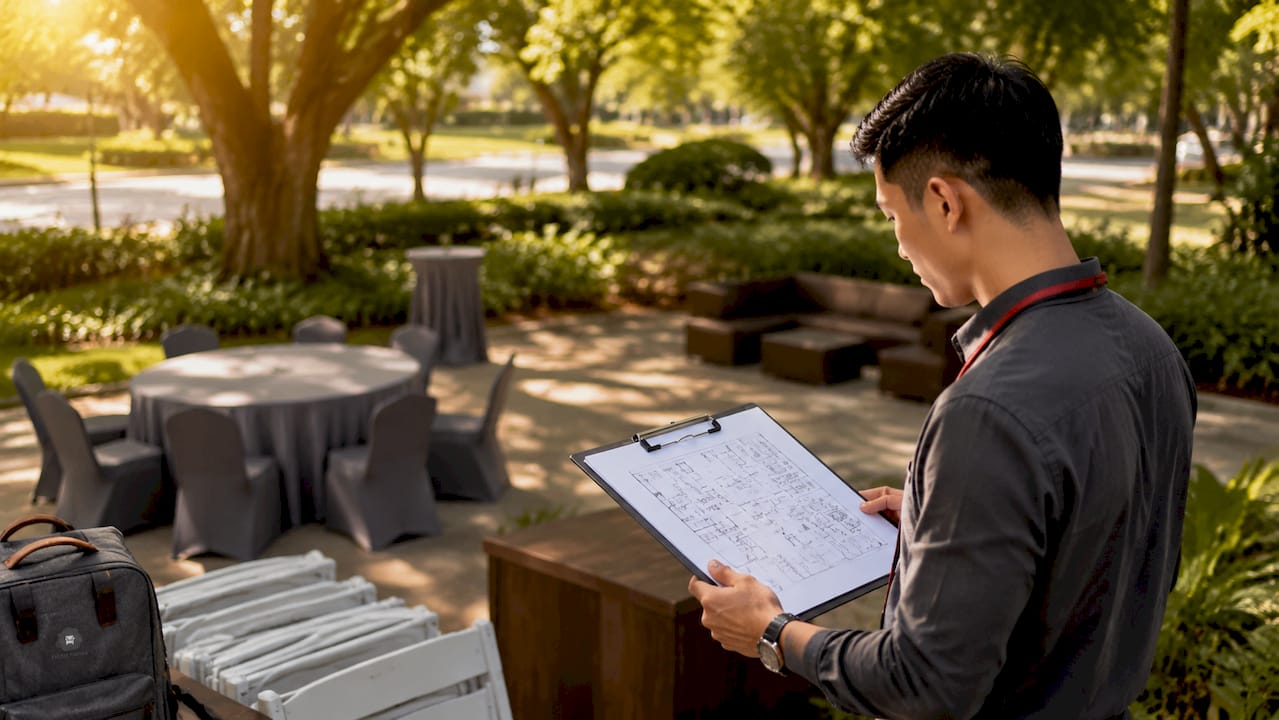
 Pro Tip: Walk the full guest arrival route yourself, from the MRT exit to the event entrance, at the same time of day your event will run. You will spot issues that no floor plan reveals.
Surrounding amenities add practical value. Venues near hotels, restaurants, and convenience stores reduce the logistical burden on your team and give guests options before and after the event.
Pro Tip: Walk the full guest arrival route yourself, from the MRT exit to the event entrance, at the same time of day your event will run. You will spot issues that no floor plan reveals.
Surrounding amenities add practical value. Venues near hotels, restaurants, and convenience stores reduce the logistical burden on your team and give guests options before and after the event.

 For planners working across multiple venue types, the full event furniture rental catalogue covers every event scale and layout. Events Partner coordinates directly with your venue team on delivery windows, setup logistics, and collection, so you can focus on running the event rather than managing the furniture.



 Delivery Fees
 Payment Methods
 FAQ
FAQ