

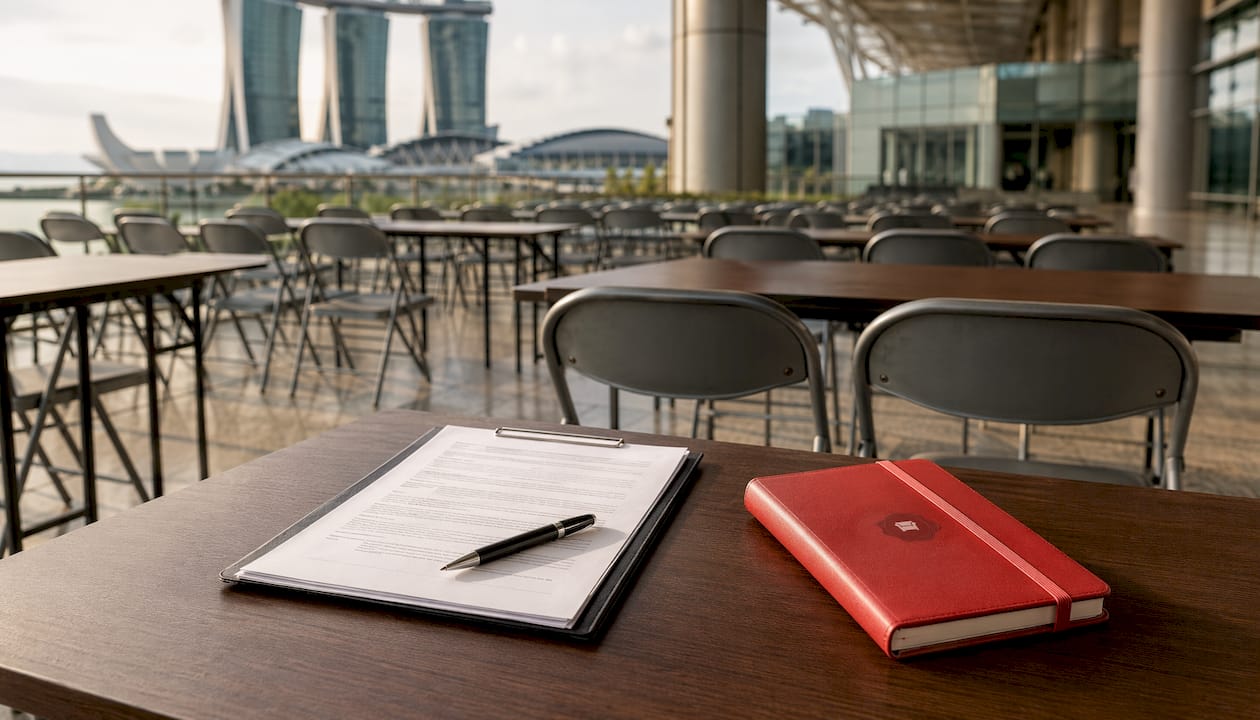
UK government bodies procure event furniture rental through competitive tendering or established framework agreements, not ad hoc purchasing. The process is governed by the Procurement Act 2023 and public sector finance rules, which together require documented supplier selection, transparent pricing, and contracts structured to fit fiscal year budgets. Rental is typically preferred over outright purchase when furniture is needed immediately or when the long-term rental cost does not exceed the purchase price, assessed case by case.
Key features of the government furniture rental process at a glance:
The most common route is a competitive tender. A contracting authority publishes a specification, invites bids, and awards on the basis of the most advantageous offer, not simply the lowest price. The Procurement Act 2023 reinforces this: reliability, logistics capacity, and installation timelines carry real weight in the evaluation, alongside cost.
Contract types vary by need. A single event may use a short-term rental agreement. Agencies running recurring events, such as annual conferences or ministerial receptions, often establish multi-year contracts covering three to five years, sometimes with renewal options. Universities and public bodies frequently go further, building rosters of pre-qualified suppliers and tendering multi-year agreements to provide stability and efficiency for ongoing furniture rental for events.
Tender submissions must include a detailed scope of works, itemised pricing, compliance evidence, and logistics plans. Vague pricing is a common reason bids fail at evaluation. Quotes must state explicitly whether delivery, setup, takedown, and retrieval are included or billed separately; all-inclusive bids are the standard expectation in government procurement to prevent budget overruns and on-site disputes.
Lease-with-purchase options appear in longer contracts where the agency wants flexibility. If the furniture proves useful beyond the event programme, the purchase clause allows acquisition without a fresh procurement exercise.
Pre-qualification is the gateway. Before a supplier can bid, they must demonstrate regulatory compliance, adequate insurance, and the operational capacity to deliver at scale and on time. Pre-qualification shortlists, once established, also allow fast, compliant selections for unscheduled government events, cutting procurement cycle times considerably.
Evaluation criteria typically cover:
The Procurement Act 2023 guidance is explicit that the “most advantageous” method balances cost with service reliability and timeline assurance. A supplier who undercuts on price but cannot guarantee delivery four weeks before a ministerial summit is not the most advantageous option.
Pro Tip: When drafting evaluation criteria, weight logistics and installation capability separately from unit price. A supplier who delivers on time, every time, saves far more than a cheaper bid that arrives late.

Fixed-term contracts under frameworks such as the Furniture and Associated Services 2 agreement typically require furniture to be available on site four weeks before an event. That lead time is not arbitrary. It allows venue logistics teams to confirm layouts, address access issues, and run compliance checks before the event date.

Contract clauses specify precise delivery and retrieval windows. Milestone scheduling is built in, with contingency provisions and financial penalties for missed deadlines. Coordination with venue logistics teams and third-party transport providers is written into the scope of works, not left to informal arrangement.
Charges for delivery, installation, dismantling, and retrieval must each be defined separately in the bid. Bundling them into a single line item creates ambiguity that leads to disputes when the event is over and the invoice arrives. For conference furniture rental in particular, where room turnarounds are tight, clarity on retrieval timing is as important as the delivery schedule.
Post-event removal timelines matter too. Venues charge for extended occupation, so a contract that leaves furniture on site for longer than agreed can generate costs the procurement officer did not budget for.
Modular statements of work are the single most effective way to reduce post-award ambiguity. Rather than specifying “conference furniture,” a well-drafted statement defines the exact configuration: number of tables, chair type, layout, and any ancillary items such as lecterns or display stands. This approach reduces change orders and prevents the supplier from substituting items the agency did not approve.
Aligning lease renewal periods with the fiscal year is not optional in UK public sector procurement. Commitments that straddle financial years without proper authorisation create illegal expenditure. Procurement officers should structure contracts so renewal decisions fall within the annual budget cycle, with clear break clauses if funding is not confirmed.
Practical guidance for government event furniture sourcing:
The lowest price rarely delivers the best outcome. Procurement officers who have run large-scale government events consistently report that supplier reliability and logistics capacity determine whether an event runs smoothly, not the per-chair rental rate.
Government event furniture procurement works best when the process is structured, the specification is precise, and the contract covers every logistical variable before a single bid is submitted.
| Point | Details |
|---|---|
| Use competitive tendering | Open tenders or framework agreements are the compliant route for government furniture rental procurement. |
| Pre-qualify suppliers first | Rosters of pre-qualified suppliers speed urgent procurements and reduce compliance risk. |
| Require all-inclusive pricing | Bids must itemise delivery, setup, takedown, and retrieval to prevent hidden costs and disputes. |
| Align contracts with fiscal year | Lease renewal periods must fit the annual budget cycle to avoid unauthorised commitments. |
| Build in delivery lead times | Fixed-term contracts should require furniture on site at least four weeks before the event date. |
Government bodies use competitive sealed bids, open tenders, and multi-year framework agreements. Contracts typically run one to five years and may include lease-with-purchase options for flexibility.
Pre-qualification confirms that a supplier meets safety, insurance, and operational standards before bidding. Pre-approved rosters also allow fast, compliant selections when an event arises at short notice.
Fixed-term government contracts commonly require furniture available on site four weeks before the event, allowing time for layout checks, compliance review, and contingency planning.
No. The Procurement Act 2023 requires awarding on the basis of the most advantageous offer, which weighs reliability, logistics capacity, and installation timelines alongside cost.
All delivery, setup, dismantling, and retrieval costs must be itemised separately in the bid. All-inclusive pricing is the standard expectation in government procurement to prevent budget overruns.



 Delivery Fees
 Payment Methods
 FAQ