Different event furniture types and how to use them
July 7, 2026
Event furniture is defined as the purpose-built seating, tables, and lounge pieces selected to support the function, flow, and atmosphere of a planned event. Choosing the right furniture is not a styling afterthought. Research shows that aligning furniture with event purpose improves guest satisfaction by 30–50%. For event planners in Singapore, where a single venue might host a corporate conference in the morning and a gala dinner that evening, understanding the different event furniture types and how to use them is the foundation of good event planning. Events Partner works with planners across Singapore to match furniture to event format, zone, and climate, so every setup performs as well as it looks.
What are the main types of event furniture and their uses?
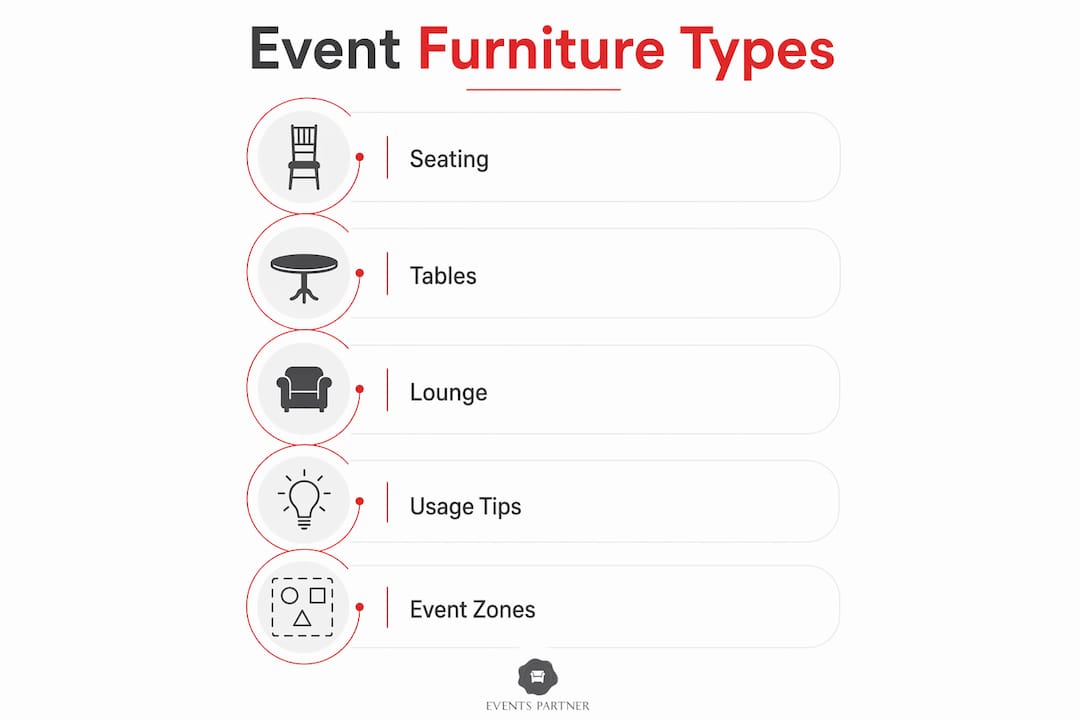
Event furniture falls into three core categories: seating, tables, and lounge pieces. Each category contains several distinct types, and each type serves a specific function. Mixing them without a plan produces cluttered, uncomfortable spaces. Using them with intention produces events that feel effortless.
Seating types and when to use them
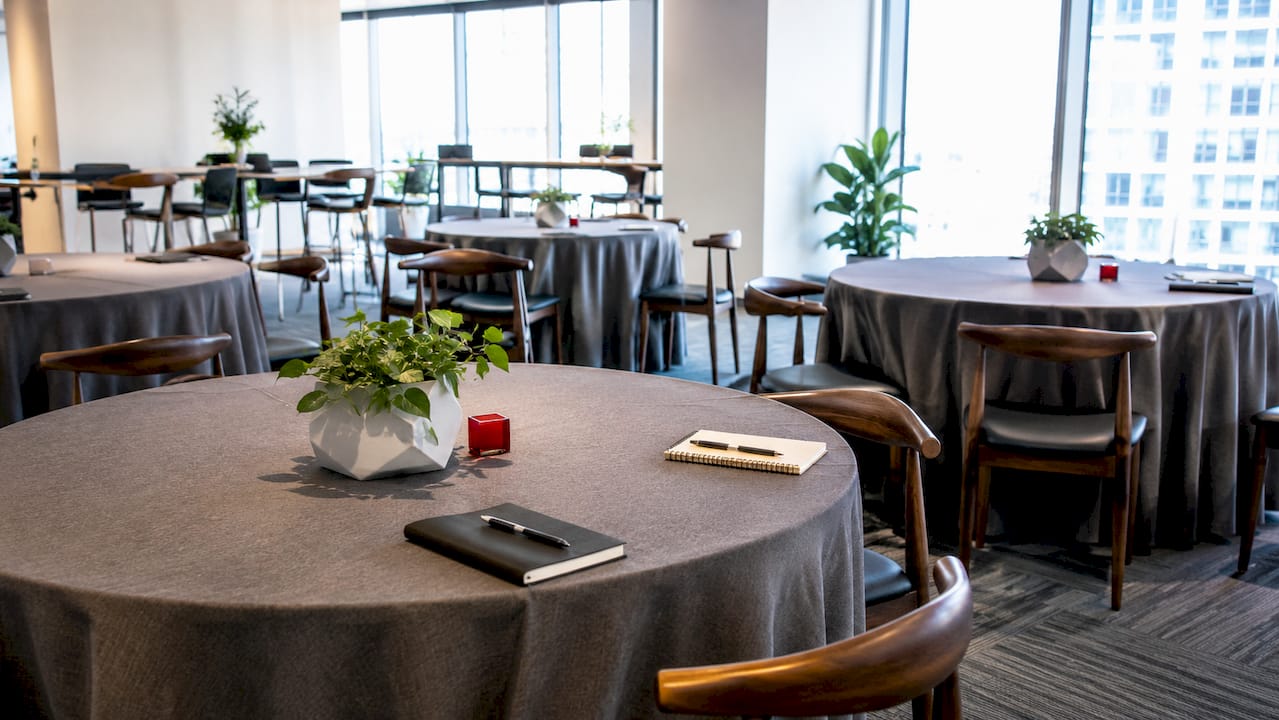
Banqueting chairs are the standard for formal seated dinners, gala events, and award ceremonies. They offer padded comfort for extended periods and stack efficiently for storage. Chiavari chairs are elegant and suitable for weddings, solemnisation setups, and high-end corporate dinners where visual refinement matters. Cross-back chairs suit rustic or garden-themed events, while folding chairs are practical for high-capacity or casual setups such as community events and roadshows.
Stackable chairs are the workhorse of conference and seminar settings. They set up quickly, pack away fast, and handle large guest counts without fuss. For sessions longer than two hours, ergonomic chairs with lumbar support reduce guest fatigue and improve how attendees perceive the event overall. High stools pair with poseur tables for networking zones where guests stand, move, and mingle rather than sit for long periods.
Table types and their event roles
Table type
Typical use
Best event fit
Round banqueting table
Seated dining, group conversation
Gala dinners, weddings, award nights
Trestle table
Registration, buffet, display
Conferences, exhibitions, roadshows
Cocktail / poseur table
Standing networking, drinks receptions
Corporate mixers, product launches
Rectangular conference table
Boardroom, workshop, panel
Meetings, seminars, training sessions
Serpentine / curved table
Buffet flow, feature displays
Gala dinners, brand activations
Round tables encourage conversation across the group. Rectangular tables focus attention forward, which suits workshops and panel discussions. Cocktail tables keep guests on their feet and moving, which is exactly what you want during a networking reception or media launch.
Lounge furniture and its role in event atmosphere
Sofas, ottomans, and low lounge chairs create social hubs within larger events. Grouping lounge chairs encourages social interaction, while formal dining arrangements foster focused attention. A well-placed lounge cluster near a registration area gives early arrivals somewhere comfortable to wait. In VIP zones at trade shows or exhibitions, lounge seating signals exclusivity and slows guests down long enough for meaningful conversations.
How do you match furniture to event zones?
Zone-specific furniture planning is the clearest way to improve guest flow and engagement. Improper furniture choices in zones reduce guest engagement by 20–40%. That is a significant drop, and it is entirely avoidable with a simple zoning approach.
Each zone in your event layout has a distinct purpose, and the furniture in that zone should support it directly:
Registration zone: Trestle tables at standing height for check-in, with a small stool or chair behind for staff. Keep the area clear of lounge pieces that slow the queue.
Conference or theatre zone: Stackable chairs in rows or classroom layout. Allow 90–120cm between chair backs and at least 150cm for main walkways to prevent congestion.
Networking zone: Poseur tables with high stools encourage standing interaction. Scatter a few lounge clusters for guests who prefer to sit.
Dining zone: Round banqueting tables with banqueting or Chiavari chairs, depending on formality. Space tables so guests can move between them without squeezing.
Lounge or VIP zone: Low sofas, ottomans, and coffee tables. This zone should feel noticeably different from the rest of the event, signalling a change of pace.
Pro Tip:Request a CAD drawing from your venue before finalising your furniture order. Usable floor space is often 20–30% less than total area due to pillars, fire exits, and fixed fixtures. Planning on paper first prevents costly last-minute changes on the day.
Furniture placement also dictates guest circulation. Layout mood starts with design: where you place a sofa cluster or a row of poseur tables tells guests where to go and how long to stay. Use this intentionally.
Does outdoor furniture need to be different in Singapore’s climate?
Outdoor events in Singapore face heat, humidity, and unpredictable rain. Standard indoor furniture fails quickly in these conditions. The right materials make a measurable difference: weather-resistant materials like powder-coated aluminium, resin, or treated teak outperform standard furniture by 60–80% in tropical climates. That gap in durability directly affects your rental costs and guest comfort over the course of an event.
For outdoor setups, prioritise these material and structural features:
Powder-coated aluminium frames: Lightweight, rust-resistant, and stable in humid conditions.
Resin or treated teak surfaces: Both resist moisture and UV degradation far better than untreated wood or standard plastic.
Weighted bases and adjustable feet: Tables with adjustable feet and weighted bases prevent instability in Singapore’s tropical wind conditions, particularly in open areas like rooftop venues and mall atriums.
Outdoor-rated cushion fabric: Choose fabrics designed for humidity. Standard foam cushions absorb moisture and become uncomfortable within an hour outdoors.
Avoid lightweight plastic chairs for outdoor use. They shift in wind, feel flimsy, and reflect poorly on the event’s quality. If budget is a concern, aluminium folding chairs with a powder-coat finish offer a practical middle ground.
Pro Tip:For outdoor events at Singapore venues like Gardens by the Bay or Sentosa, always confirm with your furniture supplier that pieces carry an outdoor-use rating. Events Partner clearly identifies which items in its catalogue are suitable for outdoor conditions, saving you the guesswork on-site.
How do you mix furniture styles without losing coherence?
Mixing furniture styles is one of the most effective ways to add visual interest to an event. Done poorly, it produces a space that looks like a clearance sale. Done well, it creates a layered, intentional atmosphere that guests notice and remember.
The principle is straightforward: choose one dominant furniture style, then introduce one or two complementary secondary styles. For a corporate product launch at a Singapore convention centre, a dominant palette of white and chrome poseur tables with matching bar stools reads as modern and professional. Adding a cluster of dark velvet lounge chairs in the networking zone introduces contrast without breaking the theme.
Consider these style-matching principles:
Modern minimalist: Clean lines, neutral tones, metal or acrylic accents. Suits corporate conferences, media launches, and brand activations. Pair with rectangular conference tables and stackable chairs in white or grey.
Rustic or garden: Cross-back chairs, treated timber tables, warm lighting. Suits outdoor weddings, solemnisations, and garden parties. Avoid chrome or acrylic pieces, which clash with natural textures.
Luxury or formal: Chiavari chairs, round banqueting tables with linen, velvet lounge seating. Suits gala dinners, award ceremonies, and VIP receptions.
Multi-functional modular furniture reduces labour costs by 15–25% during setup and allows quick reconfiguration. For Singapore venues where the same space serves multiple event segments in a single day, modular pieces are worth prioritising. A modular sofa that reconfigures from a lounge cluster into a straight row gives you flexibility without additional rental cost.
For planners working on luxury brand events, furniture style consistency is particularly critical. Every piece should reinforce the brand’s visual identity, from the chair finish to the table surface material.
What is the step-by-step process for planning event furniture in Singapore?
A structured planning process prevents the two most common mistakes: ordering too little furniture and ignoring how guests will actually move through the space.
Define your event goals and guest count. A 200-person conference requires a different furniture mix than a 200-person gala dinner. Clarify the event format, duration, and any VIP requirements before selecting a single piece.
Obtain the venue floor plan. Request a CAD drawing from the venue. Mark all fixed obstacles: pillars, emergency exits, AV equipment positions, and service doors. Calculate usable floor space, not total area.
Create a zoning plan. Divide the floor plan into functional zones: registration, seating, dining, networking, lounge, and service. Assign furniture types to each zone based on the guide above.
Apply spacing standards. Allow 90–120cm between chair backs at tables and 150cm for main thoroughfares. For outdoor setups, add buffer space for weather-related adjustments.
Select furniture that matches zone function and event theme. Cross-reference your style choices with the event’s visual identity. Confirm outdoor ratings for any pieces used outside.
Order modular or multi-functional pieces where possible. This gives you flexibility if the programme runs differently from the plan.
Conduct a layout review 48 hours before the event. Walk the floor plan with your furniture list and identify any pinch points or missing pieces.
Pro Tip:When planning corporate event furniture for conferences at venues like Suntec City or Marina Bay Sands, always account for the time guests spend moving between sessions. Narrow aisles between rows of chairs create bottlenecks that frustrate attendees and delay the programme.
For planners managing hotel event furniture setups, coordinate with the venue’s in-house team early. Many Singapore hotel ballrooms have specific furniture placement rules tied to fire safety regulations.
Planning stage
Key action
Common mistake to avoid
Goal setting
Define format, guest count, duration
Ordering furniture before confirming guest numbers
Venue assessment
Obtain CAD drawing, map obstacles
Assuming total area equals usable space
Zoning
Assign furniture types to each zone
Using the same furniture style across all zones
Spacing
Apply 90–120cm and 150cm standards
Ignoring circulation paths between zones
Style selection
Match furniture to event theme
Prioritising aesthetics over guest comfort
Modular planning
Choose reconfigurable pieces
Locking in a rigid layout with no flexibility
For events involving catering, it is worth reviewing festive meal planning considerations alongside your furniture plan. Table size and configuration directly affect how food and beverage service flows through the room.
Key takeaways
Matching furniture type to event zone and guest behaviour is the single most important decision in event furniture planning, and it determines both comfort and flow.
Point
Details
Zone-specific furniture
Assign trestle tables to registration, stackable chairs to conference, and lounge pieces to networking zones.
Spacing standards
Allow 90–120cm between chair backs and 150cm for main walkways to prevent congestion.
Outdoor material selection
Use powder-coated aluminium, resin, or treated teak for Singapore’s tropical climate.
Style coherence
Choose one dominant furniture style and add one or two complementary secondary styles.
Modular furniture value
Modular pieces reduce setup labour costs and allow quick reconfiguration during multi-segment events.
What I have learned from planning furniture for Singapore events
Prioritising aesthetics over ergonomics is the most common mistake I see in Singapore event setups. A beautifully styled chair that causes back pain after 45 minutes will define a guest’s memory of your event more than any décor choice. For sessions running longer than two hours, comfort must come first. Style follows.
The second lesson is about space. Singapore venues, from hotel ballrooms in Orchard to convention halls in Marina Bay, consistently have less usable floor space than their total area suggests. Fixed pillars, service corridors, and AV rigs eat into the plan. Planners who skip the CAD drawing stage and estimate by eye almost always end up with furniture that blocks pathways or crowds zones uncomfortably.
Modular furniture has changed how I approach space-constrained venues. A modular lounge configuration that shifts from a reception cluster to a presentation-facing row in under ten minutes gives a planner genuine flexibility. That flexibility is worth more than any single statement piece. Multi-functional furniture is particularly valuable in Singapore, where space-constrained venues are the norm rather than the exception.
The final point is one I return to with every brief: furniture placement is guest behaviour design. Where you put a lounge cluster, a poseur table, or a row of chairs tells guests where to go, how long to stay, and who to talk to. That is a planning tool, not just a logistics decision. Use it deliberately.
— Events Partner
Planning your next Singapore event with Events Partner
Events Partner provides a full range of event furniture rental for corporate events, conferences, exhibitions, weddings, gala dinners, and roadshows across Singapore. The catalogue covers every furniture type discussed in this guide, from Chiavari chairs and banqueting tables to modular lounge sets and outdoor-rated poseur tables, all clearly labelled for indoor or outdoor use.
Events Partner’s team supports planners with layout advice, transparent pricing, and reliable delivery logistics. Whether you are setting up a 50-person boardroom session or a 1,000-person gala at a Singapore convention centre, the 2026 furniture rental guide covers current options, pricing structures, and planning tips specific to Singapore venues. Submit an enquiry directly through the website to receive a tailored quote for your next event.
FAQ
What are the most common types of event furniture?
The most common types are banqueting chairs, stackable chairs, Chiavari chairs, trestle tables, round banqueting tables, cocktail or poseur tables, and lounge seating including sofas and ottomans. Each type serves a specific function within an event layout.
How do I choose the right event furniture for my venue?
Obtain a CAD drawing of the venue, map all fixed obstacles, and calculate usable floor space. Then assign furniture types to each functional zone, applying 90–120cm spacing between chair backs and 150cm for main walkways.
Is outdoor event furniture different from indoor furniture?
Outdoor furniture requires weather-resistant materials such as powder-coated aluminium, resin, or treated teak. Tables should have adjustable feet and weighted bases to remain stable in Singapore’s tropical wind and humidity conditions.
How many chairs and tables do I need for an event?
The number depends on your event format and guest count. Seated dining typically requires one chair and one table setting per guest. Networking events use fewer seats, with poseur tables and high stools shared across groups of three to four guests.
Can I mix different furniture styles at the same event?
Mixing styles works well when you choose one dominant style and add one or two complementary secondary styles. Avoid combining more than three distinct styles, as this creates visual inconsistency that distracts from the event’s atmosphere.


 Stackable chairs are the workhorse of conference and seminar settings. They set up quickly, pack away fast, and handle large guest counts without fuss. For sessions longer than two hours, ergonomic chairs with lumbar support reduce guest fatigue and improve how attendees perceive the event overall. High stools pair with poseur tables for networking zones where guests stand, move, and mingle rather than sit for long periods.
 Events Partner’s team supports planners with layout advice, transparent pricing, and reliable delivery logistics. Whether you are setting up a 50-person boardroom session or a 1,000-person gala at a Singapore convention centre, the 2026 furniture rental guide covers current options, pricing structures, and planning tips specific to Singapore venues. Submit an enquiry directly through the website to receive a tailored quote for your next event.



 Delivery Fees
 Payment Methods
 FAQ
FAQ