Event furniture rental procurement: a Singapore guide
June 22, 2026
Event furniture rental procurement is the process of systematically selecting and contracting furniture rental suppliers based on defined criteria, including reliability, compliance, logistics capacity, and cost transparency. For event professionals in Singapore, this process determines whether a conference at Suntec City, a gala dinner at Marina Bay Sands, or a roadshow at a mall atrium runs without incident. Getting procurement right means your furniture arrives on time, meets safety standards, and performs across the full event duration. Getting it wrong means last-minute gaps, hidden costs, and operational failures that no amount of good design can fix.
What is event furniture rental procurement and why does it matter?
Event furniture rental procurement is the structured supplier selection process that sits at the heart of every well-run event. The industry term used by procurement teams is vendor qualification, and it covers everything from initial supplier evaluation to contract execution and post-event strike. The process is not simply about choosing chairs and tables. It is about selecting a supply chain partner capable of delivering the right quantity, in the right condition, at the right time, to the right venue.
Procurement teams focus on risk mitigation, service-level agreement commitments, and supply chain transparency before any aesthetic decisions are made. This matters because furniture is the physical infrastructure of an event. A missing batch of cocktail tables at a networking event, or chairs that fail a fire safety inspection at a hotel ballroom, creates problems that cannot be resolved on the day.
Singapore’s event calendar is dense. Corporate conferences, MICE events, product launches, and weddings often run concurrently across venues such as the Singapore Expo, Raffles City Convention Centre, and hotel ballrooms island-wide. That density makes supplier reliability a non-negotiable procurement criterion, not a preference.
What are the key procurement criteria for event furniture rental suppliers in Singapore?
Core evaluation criteria for furniture suppliers include delivery fleet ownership, depot proximity, stock consistency guarantees, and transparent pricing with detailed line-item fees. Each criterion carries weight for a different reason.
Supplier infrastructure and logistics capacity
A supplier’s depot location and fleet ownership directly affect delivery reliability. Suppliers without owned vehicles depend on third-party logistics, which introduces scheduling risk. Depot capacity and fleet ownership are key to supporting complex, multi-location, and rapid strike events. For a multi-day exhibition at Singapore Expo, the ability to execute a same-day strike and redeploy furniture to another venue is a logistics test that smaller suppliers routinely fail.
Pricing transparency and total cost of ownership
Furniture rental pricing typically includes base rental, delivery, setup, strike, overtime, and damage waiver fees. Procurement approvals move faster when pricing is consistent and fully itemised. Total cost of ownership includes repair costs, overtime labour fees, risk of stock shortages, and operational complexities, which can outweigh the initial unit price in importance. Always request a line-item quote before signing. For a practical breakdown of what to watch for, the Events Partner article on hidden rental fees is a useful reference.
Pro Tip:Ask every supplier to provide a fully itemised quote that separates delivery, setup, strike, and overtime charges. A supplier who bundles all fees into a single line is a supplier who controls what you cannot see.
Compliance, documentation, and service-level agreements
Corporate buyers require insurance documentation, proof of workers’ compensation, and service-level agreements specifying precise arrival windows. Venue managers at hotels and convention centres in Singapore increasingly require method statements and risk assessments before granting access. Suppliers who cannot produce these documents on request are a liability, not a resource.
Criterion
What to verify
Delivery fleet
Owned vehicles vs. third-party logistics
Stock availability
Guaranteed quantities for confirmed bookings
Pricing structure
Full line-item breakdown including overtime
Compliance documents
Insurance, BS 7837 fire certification, risk assessments
Service-level agreement
Precise arrival windows, escalation contacts
Emergency support
Replacement policy for damaged or missing items
Why treat event furniture as infrastructure, not decoration?
Procurement professionals view furniture rental as infrastructure critical to event stability, shifting focus from aesthetics to operational reliability. This is the single most important mindset shift an event professional can make. A beautiful lounge setup that arrives two hours late, or bar stools that wobble under guest weight, fails the event regardless of how well they photograph.
The operational risk of design-led procurement
Design-led procurement prioritises how furniture looks. Infrastructure-led procurement prioritises whether it will be there, whether it will hold, and whether it meets the venue’s safety requirements. The difference shows up most clearly in complex venues. A convention centre load-in at Marina Bay Sands has strict lift access windows, floor-load restrictions, and security protocols. A supplier without documented load-in procedures and a trained logistics team will miss those windows.
Standardised SKUs across events facilitate easier forecasting, reduce errors, and improve onsite team performance. When you use the same chair model across your annual conference series, your team sets up faster, your supplier forecasts stock accurately, and your risk of last-minute substitutions drops significantly. Standardisation is a procurement tool, not a creative limitation.
Pro Tip:Build a preferred furniture SKU list for your recurring events. Share it with your supplier at the start of each planning cycle. This single step reduces quote turnaround time and eliminates substitution surprises on event day.
Technical documentation and risk management plans accelerate vendor onboarding and ensure compliance with venue and safety rules. Suppliers who arrive with method statements, load-in safety policies, and egress strategies are suppliers who have done this before at scale.
How does Singapore’s tropical climate affect furniture procurement?
Selecting furniture designed for tropical climates significantly extends service life and maintains compliance in Singapore’s event environment. Singapore’s heat and humidity accelerate material degradation in ways that temperate-climate furniture specifications do not account for. Foam padding absorbs moisture. Metal joints corrode. Fabric upholstery develops mildew in poorly ventilated storage.
Suppliers should provide technical documentation including load-bearing capacity figures and fire certifications such as BS 7837. BS 7837 is the British Standard for fire resistance in furniture used at public events. Many Singapore venues and the Singapore Civil Defence Force require compliance with equivalent fire safety standards for furniture used in public-facing events. A supplier who cannot produce this certification creates a compliance gap that falls on the event organiser to explain.
Ignoring fire safety certifications and maintenance records leads to liabilities during regulatory inspections. The climate-specific procurement checklist for Singapore events should include:
Material suitability: confirm furniture uses moisture-resistant materials and rust-resistant hardware
Fire safety certification: request BS 7837 or equivalent documentation for all upholstered pieces
Maintenance records: verify the supplier’s cleaning and inspection schedule between rental cycles
Replacement policy: confirm the supplier holds buffer stock for worn or damaged items
Outdoor suitability: for garden weddings, solemnisations, or mall atriums, confirm UV and rain resistance ratings
Storage conditions: ask where furniture is stored between events and whether the facility is climate-controlled
What steps should event professionals follow for effective procurement?
Effective event furniture rental procurement follows a clear sequence. Skipping steps, particularly early-stage supplier vetting, is the most common cause of avoidable problems on event day.
Define your furniture requirements in full. List every item by type, quantity, colour, and configuration. Include setup and strike times, venue access restrictions, and any compliance requirements from the venue or client.
Vet supplier infrastructure before requesting quotes. Ask directly: Do you own your delivery vehicles? Where is your depot? What is your guaranteed stock availability for confirmed bookings? Failing to verify supplier infrastructure leads to common event setup failures in complex venues.
Request fully itemised quotes from at least two suppliers. Compare line by line. Delivery, setup, strike, overtime, and damage waiver fees must all appear separately. Use the Events Partner guide on transparent rental pricing as a benchmark for what a clear quote looks like.
Verify compliance documentation. Request public liability insurance certificates, workers’ compensation proof, fire safety certifications, and any method statements required by your venue. Do this before signing, not after.
Confirm service-level agreement terms in writing. Procurement teams demand measurable commitments such as precise delivery windows, documented escalation paths, and incident reports rather than vague promises. Your contract should specify the exact arrival window, the name of the onsite supervisor, and the process for emergency replacements.
Establish a contingency plan. Reliable suppliers provide emergency replacement services and responsive support to address wear and operational risks during events. Confirm this capability explicitly, particularly for multi-day events at venues such as Singapore Expo or Changi Exhibition Centre.
Conduct a post-event review. Document what arrived on time, what was substituted, and any compliance issues. This record informs your next procurement cycle and strengthens your negotiating position with suppliers.
For multi-venue furniture delivery, add a coordination layer that maps each venue’s access windows, lift capacities, and loading bay restrictions before confirming delivery schedules with your supplier.
Key takeaways
Event furniture rental procurement is a structured supplier qualification process that prioritises logistics, compliance, and cost transparency over aesthetics, and it determines whether an event succeeds operationally.
Point
Details
Define procurement as supplier qualification
Treat furniture rental as infrastructure selection, not a design decision.
Verify supplier logistics capacity
Confirm fleet ownership, depot proximity, and guaranteed stock availability before signing.
Obtain insurance certificates, fire safety certifications, and method statements before contract sign-off.
Plan for Singapore’s climate
Specify moisture-resistant, fire-certified materials and confirm the supplier’s maintenance and replacement policies.
What I have learned from procurement failures in Singapore events
The most expensive procurement mistakes I have seen in Singapore’s event industry share one characteristic: the organiser chose a supplier based on price and visual catalogue, without verifying a single operational detail. The furniture arrived late, was substituted without notice, or failed a venue inspection. None of those outcomes were surprises in hindsight. They were predictable from the supplier’s inability to answer basic infrastructure questions at the quoting stage.
The procurement criteria that event professionals consistently underweight are logistics capacity and emergency support. Most organisers ask about price. Far fewer ask whether the supplier owns its vehicles, where its depot is relative to the venue, or what happens if twenty chairs arrive damaged on the morning of a gala dinner. Those questions feel awkward to ask. They are the most important questions on the list.
Singapore’s venue landscape adds a layer of complexity that generic procurement frameworks do not address. Load-in windows at Marina Bay Sands, Raffles City Convention Centre, and Suntec City are tightly managed. A supplier who has never delivered to these venues will underestimate the time required and overestimate their access. Ask your supplier directly: have you delivered to this venue before, and can you provide a reference from that event?
The shift from design-led to infrastructure-led procurement does not mean ignoring aesthetics. It means resolving all operational questions first, then making design choices within a confirmed, reliable supply framework. That sequence produces better events and fewer crises.
— Events Partner
Events Partner: procurement-ready furniture rental in Singapore
Events Partner operates from a Singapore depot with an owned fleet, real inventory, and transparent line-item pricing across all event types, from corporate conferences to gala dinners, roadshows, and weddings.
Every quote from Events Partner itemises delivery, setup, strike, and overtime fees separately. Compliance documentation, including insurance and fire safety certifications, is available on request. The team supports event professionals with method statements, site-specific logistics planning, and emergency replacement cover for multi-day events. For a full overview of available furniture and rental terms, visit the Events Partner rental catalogue or contact the team directly for a tailored quote.
FAQ
What is event furniture rental procurement?
Event furniture rental procurement is the structured process of selecting, vetting, and contracting furniture rental suppliers based on logistics capacity, compliance, pricing transparency, and service reliability. It treats furniture as operational infrastructure rather than a decorative choice.
What should I include in an event furniture rental checklist for Singapore?
A Singapore-specific checklist should cover supplier fleet ownership, depot location, stock availability guarantees, BS 7837 fire certification, public liability insurance, line-item pricing, SLA delivery windows, and a confirmed emergency replacement policy.
How do I evaluate event furniture vendor selection criteria?
Evaluate suppliers on five core criteria: logistics infrastructure, stock reliability, pricing transparency, compliance documentation, and service-level commitments. Ask for references from comparable Singapore venues before signing any contract.
Why does Singapore’s climate matter for furniture procurement?
Singapore’s heat and humidity degrade foam, fabric, and metal components faster than temperate climates. Procurement should specify moisture-resistant materials, confirm fire safety certifications, and verify the supplier’s maintenance and replacement schedule between rental cycles.
What hidden costs should I watch for in furniture rental contracts?
Common hidden costs include overtime delivery fees, unstated strike charges, damage waivers applied per item, and surcharges for venues with restricted access. Always request a fully itemised quote and compare it line by line before committing.




 Pro Tip: Ask every supplier to provide a fully itemised quote that separates delivery, setup, strike, and overtime charges. A supplier who bundles all fees into a single line is a supplier who controls what you cannot see.
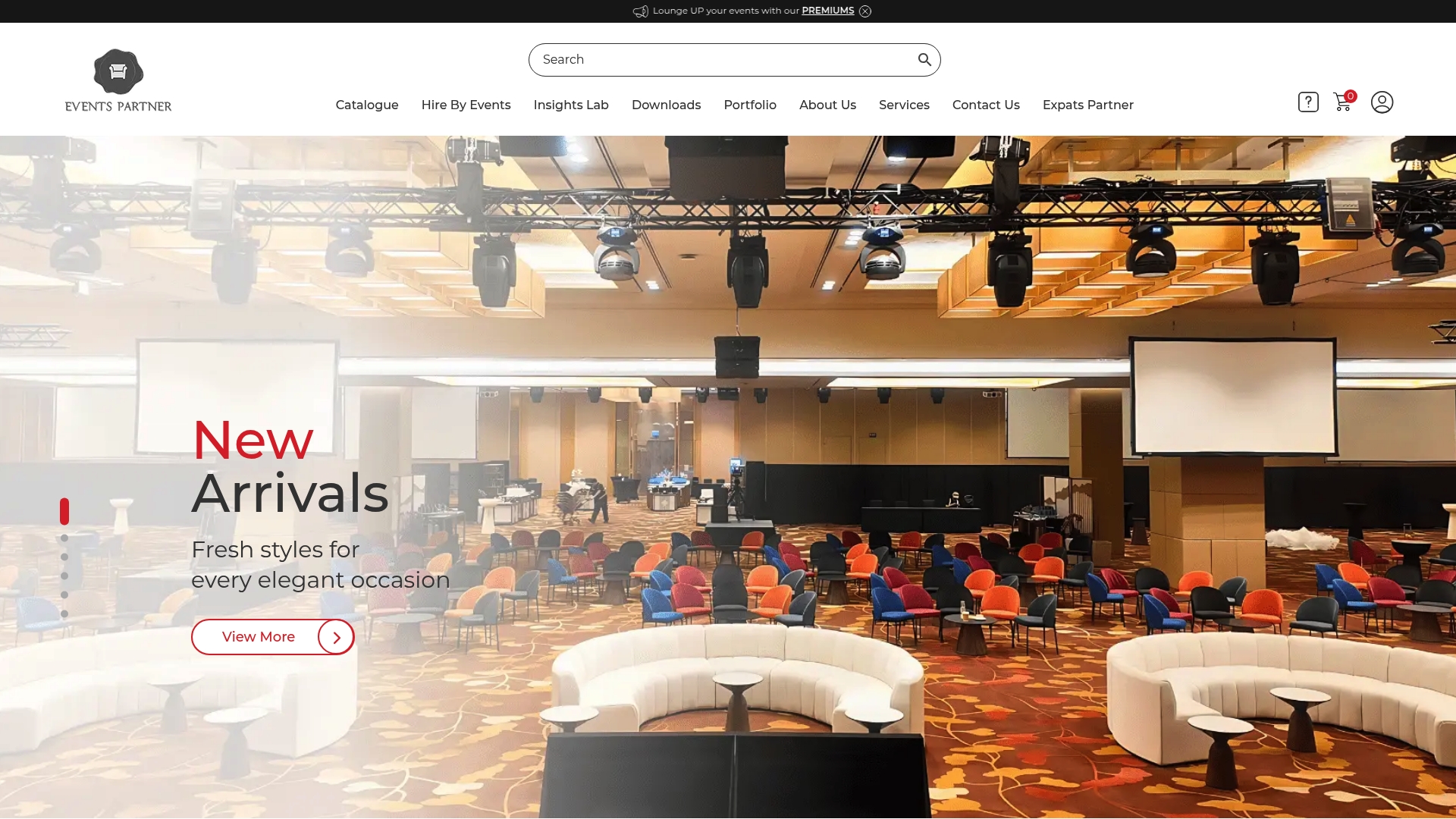 Every quote from Events Partner itemises delivery, setup, strike, and overtime fees separately. Compliance documentation, including insurance and fire safety certifications, is available on request. The team supports event professionals with method statements, site-specific logistics planning, and emergency replacement cover for multi-day events. For a full overview of available furniture and rental terms, visit the Events Partner rental catalogue or contact the team directly for a tailored quote.



 Fleet Deployment Rates
 Payment Methods
 FAQ
FAQ