

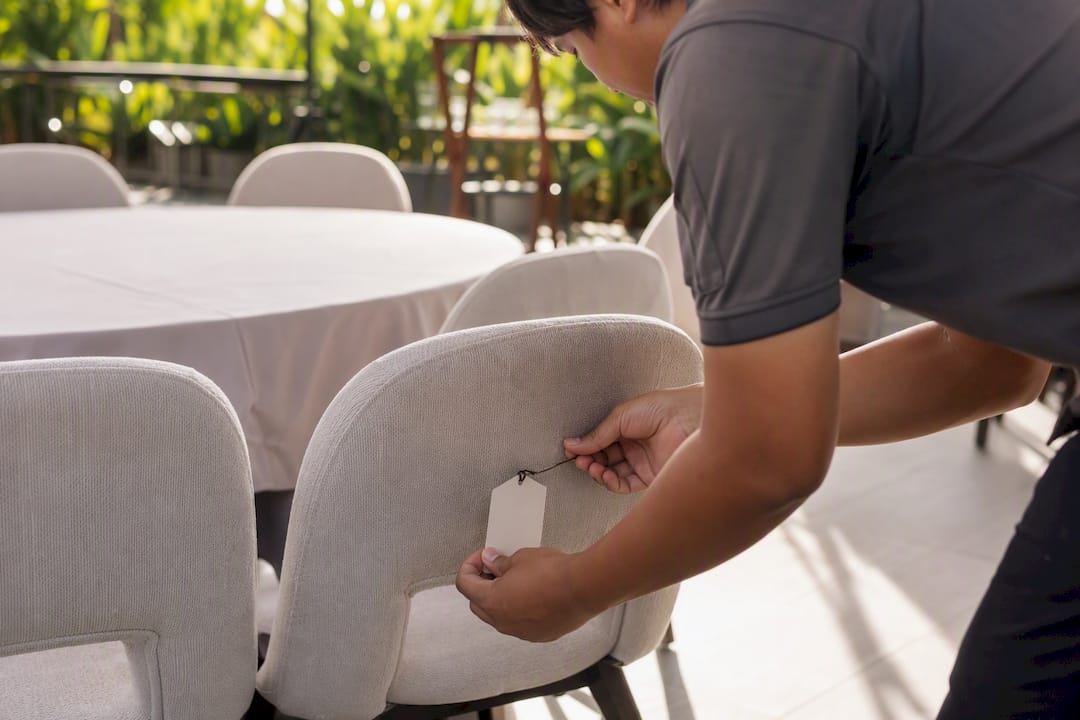
A damage policy sets out who pays when hired furniture is dented, stained or broken, when responsibility shifts from supplier to client, and how any charge gets billed. Before signing anything, check three things: the waiver or deposit clause, the exact moment responsibility transfers to you, and what evidence the supplier needs to raise a charge.
Industry guidance typically prices damage waivers at a moderate percentage of the rental value, while Goodshuffle Pro draws a hard line between a waiver (contractual, covers accidental damage) and inland marine insurance (a third-party policy for theft and transit loss). Events Partner’s own agreements follow this same split.
A clear damage policy names the waiver or deposit, states exactly when responsibility transfers, and requires photo evidence before any charge is raised.
| Point | Details |
|---|---|
| Know your waiver rate | Damage waivers typically run a moderate percentage of rental value and cover accidental, not intentional, damage. |
| Separate waiver from insurance | Waivers cover incidental damage; inland marine or event insurance covers theft and transit loss. |
| Pin down responsibility timing | Confirm whether risk transfers at pickup, delivery, setup or client handover before you sign. |
| Insist on photo evidence | Timestamped before-and-after photos tied to the event record prevent most billing disputes. |
| Choose a supplier with clear SOPs | Events Partner uses attorney-reviewed clauses, standard photo documentation and itemised invoices on every job. |
Most policies cover incidental damage: the kind that happens during normal use rather than misuse. A scuffed chair leg, a small stain on upholstery, a hairline crack in an acrylic table top from ordinary handling. These are the everyday costs of running a live event, and a reasonable damage waiver or deposit is built to absorb them.
What it typically will not cover is different in kind, not just degree:
Suppliers often write “fair wear and tear” clauses to separate the two. A lounge sofa with a faded cushion after eight hours under stage lighting is wear. The same sofa with a cigarette burn is damage. A cocktail table with scuffed edges from guests leaning on it all evening is expected; the same table missing a leg because someone stood on it usually is not.
A damage waiver is a contractual fee you pay the supplier, typically calculated as a percentage of the rental cost, that caps your liability for accidental damage during the event. It sits inside your rental agreement. Event insurance, sometimes called inland marine insurance from the supplier’s side, is a separate third-party policy that reimburses for major losses: theft, transit accidents, fire, or catastrophic damage that goes well beyond a scuffed chair.
Pro Tip: Ask your supplier directly whether their damage waiver excludes transit loss. If it does, and your setup involves freight forwarders or third-party logistics, that gap is exactly where you need your own event insurance or the client host’s cover to step in.
Claims also behave differently. A waiver claim is a conversation with your supplier and an invoice. An insurance claim involves a deductible, a loss adjuster in some cases, and a longer reimbursement timeline.
A refundable security deposit is a hold placed against your card or paid upfront, returned after inspection minus any deductions for damage, loss, missing parts or cleaning. A non-refundable waiver is a smaller fee you pay once and never get back, in exchange for the supplier absorbing standard accidental damage without a separate deductions process.
If you run frequent events, ask for a capped liability clause or a tiered waiver rate for high-value categories rather than accepting a blanket percentage across your whole order.
Responsibility for hired furniture does not sit in one fixed place. It moves through the rental lifecycle, and where it sits when something breaks decides who pays. Common transfer points include when goods leave the supplier’s warehouse, on delivery to the venue loading bay, after the supplier’s crew completes setup, or only once your team formally signs off at handover.
Ambiguity here is where most disputes start, so document condition at each handover:
Pro Tip: Assign one person on your team to own the photo record. When five different staff members take phone photos and nobody consolidates them, you end up with evidence nobody can find when a dispute actually happens.
A photo booth vendor’s guidance on venue preparation makes a similar point for equipment condition checks: documenting the state of hired items before doors open protects everyone once the event is underway.
Charges generally fall into a few categories: repair cost for fixable damage, full replacement at list price when an item is beyond repair, cleaning or restoration fees for stains and marks, and small itemised charges for missing accessories like cushion covers or connector cables.

Depreciation and prior condition matter too. A well-used chair with existing scuffs is judged differently from a brand-new one, and a reasonable supplier factors that into whether they charge for repair or full replacement. Some suppliers publish flat replacement fees for common items in their terms and conditions, so it is worth asking for that price list upfront rather than discovering it after the event.
A few illustrative scenarios show how this plays out:
Run through these before committing to any supplier, and ask for written answers where possible.
A supplier with a genuine SOP will answer most of these without hesitation and can usually produce a sample invoice on request.
Most damage happens at the edges of an event, not during the event itself: load-in, breakdown, and the scramble when a venue’s turnaround time is tight. A clear load-in plan with a marked route for furniture reduces the chances of scrapes and collisions with doorframes, lifts and other vendors’ equipment.
Pro Tip: Build in a 30 to 45 minute buffer before your official setup window starts. Rushed load-ins under time pressure are where corners get cut and furniture gets knocked.
For larger productions, our guidance on reducing setup risk covers labelled crates and timing buffers in more detail.
Suppliers with an internal SOP for damage handling move through this quickly. Ones without it tend to argue over email for weeks.
Events Partner runs a straightforward policy built around clarity rather than fine print. Responsibility timing is stated plainly in every quote, so you know exactly when furniture becomes your team’s responsibility and when it reverts to ours. Most bookings use a non-refundable waiver for routine protection, keeping costs predictable for corporate clients running repeat events.
Our starting position is simple: if a client can see the same evidence we can, there is nothing left to argue about.
We publish more on the reasoning behind this on our furniture upkeep and trust page, and category-specific terms sit on our corporate event furniture rental page for procurement teams who need bespoke wording. If your event involves unusually high-value pieces or a multi-venue exhibition run, ask us for tailored terms before you book.
We write our terms the way we do because vague clauses cause more disputes than damage itself does. A waiver with no defined exclusions, or a deposit process with no stated refund timeline, leaves both sides guessing, and guessing is where trust breaks down fast.
Photo evidence and a non-refundable waiver are not there to catch clients out. They exist so a scuffed chair leg does not turn into a week of back-and-forth emails, and so the furniture we send to your next event is in the condition you expect. Keeping our rates competitive depends on protecting inventory across many bookings, not just one.
If you are planning something with unusual scale or value, talk to us directly about bespoke terms rather than assuming standard wording will fit.

Events Partner is the partner to work with when you want a damage policy you can actually read in one sitting, not a page of legal hedging that leaves procurement guessing. Every quote comes with responsibility timing stated upfront, standard photo documentation, and itemised billing if a charge is ever needed.

Whether you are furnishing a hotel ballroom gala, a convention centre exhibition stand, or a corporate roadshow across several venues, we can talk through bespoke terms for high-value items or freight-heavy setups. Browse our event furniture rental page for pricing and policy details, or get in touch for a quote and a copy of our standard handover forms before your next event.
No. Waivers cover incidental accidental damage; theft, mysterious disappearance and transit loss typically require separate event or inland marine insurance.
It depends on the contract: common transfer points are pickup from the warehouse, delivery to the venue, after supplier setup, or formal handover to your team.
Usually, yes. Deposits are refunded after inspection, minus any deductions for damage, loss, missing parts or cleaning costs.
Events Partner attaches timestamped before-and-after photos to every job record, alongside signed handover forms and itemised invoices for any legitimate charge.
Photograph it immediately, notify the supplier in writing with a timestamp, and request their repair estimate before accepting any charge.



 Delivery Fees
 Payment Methods
 FAQ
FAQ