How to allocate buffer time for event installation
July 4, 2026
Buffer time allocation is the practice of scheduling deliberate, protected gaps before and after event installation phases to absorb delays, manage risk, and protect fixed milestones. Industry standards recommend adding a 25–30% buffer to any event setup schedule, with a minimum of 1–2 hours reserved before complex tasks begin. For event planners and coordinators in Singapore, knowing how to allocate buffer time for pre-event and post-event installation is the difference between a smooth handover and a chaotic last hour. This guide covers specific durations, staffing ratios, layered scheduling techniques, and the common mistakes that erode even the best-planned timelines.
How much buffer time should you allocate for pre-event setup?
The standard minimum for pre-event buffer time is 1–2 hours before any complex installation task begins. That window covers late deliveries, access point queues at loading bays, and last-minute technician calibration. Without it, a single delayed furniture truck at Suntec City or Marina Bay Sands can push every subsequent task back by the same margin.
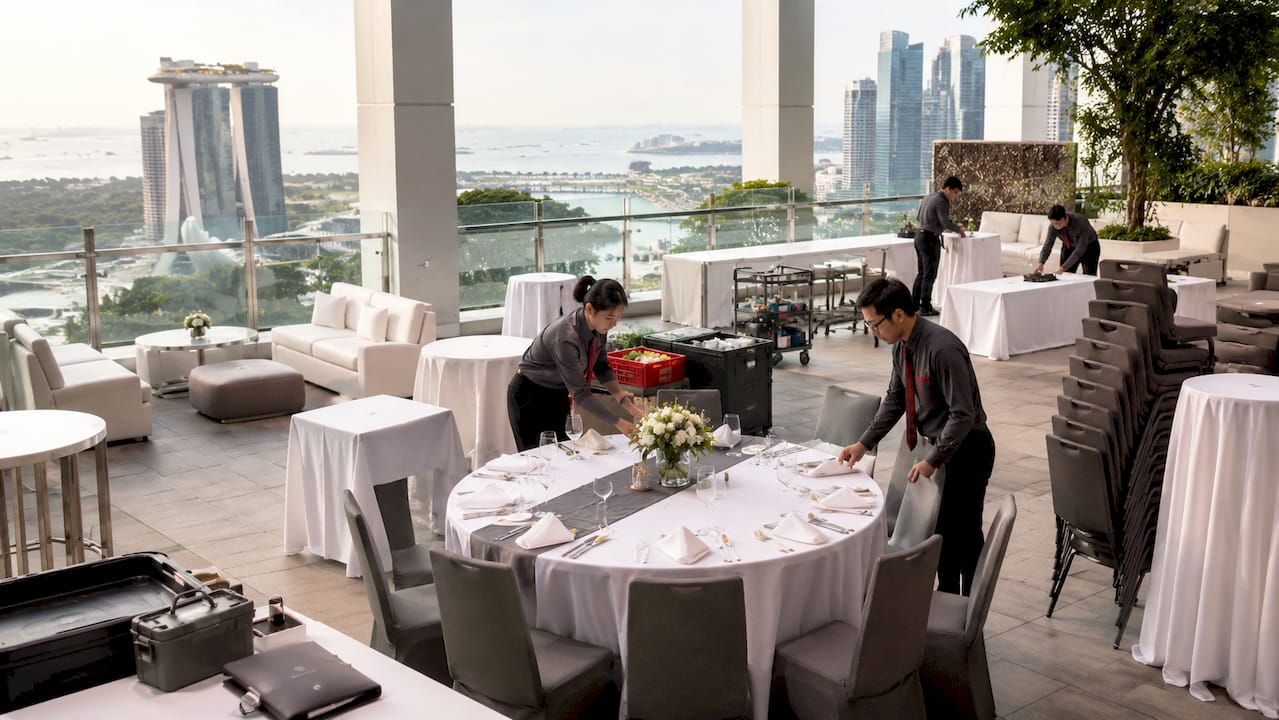
Buffer duration scales with event risk and complexity. High-risk setups such as large-scale exhibitions or gala dinners with rigging may require buffers of 50–100% of the estimated task duration. Low-risk setups such as a small boardroom conference need only 10–20%. The practical implication is that a task estimated at two hours for a high-complexity exhibition should carry a one to two hour buffer on top of that estimate.
Delays often arise from vendors arriving out of sequence. When the audio-visual crew arrives before the furniture is in place, both teams stall at the same loading dock. Layering setup tasks in logical order, starting with infrastructure, then technical equipment, then décor, prevents this kind of resource conflict. Buffer time between each layer gives each crew room to finish cleanly before the next begins.
Reserve 1–2 hours minimum before the first complex task, regardless of event size.
Scale buffer percentage to event risk: 10–20% for simple setups, 50–100% for complex ones.
Sequence vendors by dependency: infrastructure first, then technical, then aesthetic.
Account for venue-specific constraints such as shared loading docks and lift access at Singapore convention centres.
Build a separate buffer for technician calibration, which cannot be rushed without risking equipment failure.
Pro Tip:When booking venue access at Singapore Expo or Changi Exhibition Centre, confirm loading dock availability in writing and add 30 minutes to your buffer estimate for each shared access point.
What is the recommended buffer time and staffing for post-event breakdown?
Post-event teardown consistently takes longer than setup. Fatigue and late-night conditions mean teardown requires 20–30% additional time compared to the original load-in estimate. A setup that took four hours should carry a teardown estimate of five to five and a half hours, with buffer time on top of that.
Staffing ratios matter as much as time. The standard is approximately one worker per 250–300 sq ft for general setup, with elevated rigging requiring an additional 10–15% of crew. Teardown needs 20% more staff than load-in to maintain pace and safety. A 3,000 sq ft ballroom setup that used ten crew members should have twelve for teardown.
Physical work slows significantly in post-event phases. Safety incidents are more likely when crew are fatigued and working under time pressure to meet venue clearance deadlines. Building a proper post-event buffer reduces the risk of overtime penalties and protects your crew from working in unsafe conditions.
Plan teardown time at 20–30% longer than your setup estimate.
Staff teardown at 20% above your load-in crew count.
Add one hour of buffer before the venue’s final clearance deadline.
Use staged breakdown sequencing: clear décor first, then technical equipment, then furniture and infrastructure.
Brief crew on the breakdown sequence before the event ends so they can begin immediately after guests depart.
Pro Tip:For late-night teardowns after gala dinners or award ceremonies, schedule a 15-minute crew briefing and rest break at the start of breakdown. It takes 15 minutes but prevents the kind of fatigue-driven errors that cost hours to fix.
Which methods ensure effective buffer time integration into event schedules?
Reverse scheduling is the most reliable method for allocating buffer periods effectively. Working backwards from fixed deadlines such as the event start time or venue clearance time ensures that every buffer protects a real milestone rather than an arbitrary start point. Begin with the hard deadline, subtract the final task duration, then subtract the buffer, and continue backwards through each layer of the installation.
The layering approach structures installation into four distinct phases: infrastructure (furniture, staging, flooring), technical (AV, lighting, power), aesthetic (décor, floral, signage), and final checks. Each phase ends with a quality gate before the next begins. This structure makes buffer time more effective because delays in one phase do not automatically cascade into the next.
Mapping logistic flows is equally critical. Identify every physical constraint at your venue: loading dock hours, lift capacity, corridor widths, and access restrictions. Singapore venues such as hotel ballrooms at the Raffles City Convention Centre or atrium spaces in Orchard Road malls each carry specific access rules that affect how much buffer you need at each transition point. A master event timeline that includes these constraints gives every vendor a shared reference point.
Buffer allocation approach
Best suited for
Key advantage
Percentage-based (10–20%)
Low-risk meetings and networking events
Simple to calculate and communicate
Percentage-based (50–100%)
Exhibitions, gala dinners, rigged setups
Accounts for high task complexity
Fixed time block (1–2 hours)
All events, pre-event phase
Protects against universal delay risks
Reverse scheduling
All events with fixed deadlines
Anchors buffers to real milestones
Layered phase buffers
Multi-vendor, multi-zone setups
Prevents inter-phase cascading delays
Documented buffers shared with all vendors create accountability across the entire installation team. Every supplier, from furniture rental to AV to floral, should receive the same master timeline with buffer slots clearly marked. This removes ambiguity and gives each vendor a clear picture of when they are expected on site and when they must be finished.
What common mistakes do event planners make with buffer time?
The most damaging mistake is keeping buffer time private. When a planner builds a personal buffer into their own schedule but does not share it with vendors, delays accumulate invisibly until the buffer is exhausted. Unshared buffers push delays forward and erode schedule reliability without anyone realising it until the last hour.
Keeping buffers private. Buffer time must appear in the shared master timeline. Every vendor needs to see it.
Underestimating switching costs. Moving from one high-concentration task to another takes time. A 15–20 minute recovery buffer after intense technical tasks such as AV calibration or lighting programming prevents compounding errors.
Ignoring site-specific constraints. A buffer that works at a standalone event space may be completely inadequate at a hotel ballroom with shared lifts and restricted access hours.
Treating teardown as an afterthought. Post-event wrap-up time is consistently under-budgeted. Venue penalties for late clearance in Singapore can be significant, particularly at premium venues.
Failing to brief the full team. A buffer in a document means nothing if the crew on site does not know it exists or what triggers it.
Pro Tip:Use your event furniture checklist to cross-reference every installation task against your buffer slots. If a task has no buffer assigned, it is a schedule risk.
Splitting labour into physical installation tasks and technical calibration tasks also prevents rushing. When the same crew handles both furniture placement and AV setup, one task always gets compressed. Assigning separate teams to each function, where budget allows, keeps both on schedule.
What tools and practices support real-time buffer management on event day?
Digital checklists and real-time event management apps are the most practical tools for tracking buffer time on the day. Group chats and communication platforms allow immediate rescheduling when unexpected setbacks occur, whether that is a delayed delivery or a technical fault. The key is that every team lead has access to the same live timeline.
Assign a dedicated timeline manager whose sole role is to monitor progress against the master schedule and flag when tasks are running over.
Use group messaging to communicate buffer activations immediately. When a buffer is triggered, every vendor needs to know within minutes.
Embed quality gates at the end of each installation phase. A quick walkthrough before the next phase begins catches issues while there is still time to fix them.
Allocate floating coverage staff, one or two crew members without fixed tasks, who can be deployed wherever a delay is developing.
Set checkpoint times, not just task start times. A checkpoint at 60% of a task’s estimated duration tells you early whether you are on track or burning into your buffer.
Including contingency crew in your staffing plan prevents schedule collapse when a key installer faces an unexpected delay or needs a break. This is particularly relevant for large-scale multi-zone setups at Singapore convention centres, where a single delayed zone can affect the entire event flow. For complex installations, consider how multi-zone furniture planning affects your buffer requirements across different areas of the venue.
Key takeaways
Effective buffer time allocation requires documented, shared schedules built on reverse scheduling, layered task sequencing, and staffing ratios calibrated to event complexity and teardown fatigue.
Point
Details
Standard buffer minimum
Add 25–30% to setup schedules and at least 1–2 hours before complex tasks begin.
Teardown needs more time
Plan teardown at 20–30% longer than setup, with 20% more crew to maintain pace safely.
Reverse scheduling works best
Build timelines backwards from fixed deadlines to anchor every buffer to a real milestone.
Share buffers with all vendors
Documented buffer slots in the master timeline create accountability and prevent hidden delays.
Recovery buffers prevent errors
A 15–20 minute break after intense technical tasks reduces compounding mistakes and fatigue.
Why buffer time is the most underrated tool in event planning
Buffer time is a deliberate operational tool, not idle slack. After working with event planners across Singapore’s corporate and exhibition circuit, the pattern is consistent: the events that run smoothly are not the ones with the most experienced crews. They are the ones with the most honestly built timelines.
The hardest conversation in event planning is telling a client that you need four hours of access before their event starts, not two. Venues push back. Clients question the cost. But a single cascading delay at a 500-person gala dinner at Marina Bay Sands costs far more in overtime, vendor penalties, and reputation than the extra access hours ever would.
The layered scheduling approach, infrastructure before technical before aesthetic, is the single most effective structural change a planner can make. It does not require more time overall. It requires the same time, organised so that each crew can work without waiting on another. Buffer time within that structure becomes a genuine safety net rather than a vague hope that things will work out.
Negotiating venue access in Singapore also requires specificity. Asking for “extra time” rarely works. Presenting a reverse-scheduled master timeline with named buffer slots and a staffing plan gives venue managers something concrete to approve. That specificity also builds trust with your vendors, who can see exactly where they fit and what happens if they run late.
The planners who struggle with buffer time are usually the ones treating it as a private cushion. Make it public, make it official, and make it part of every conversation with every vendor from the first briefing. That transparency is what turns a good plan into a reliable one.
— Events Partner
How Events Partner supports your installation schedule in Singapore
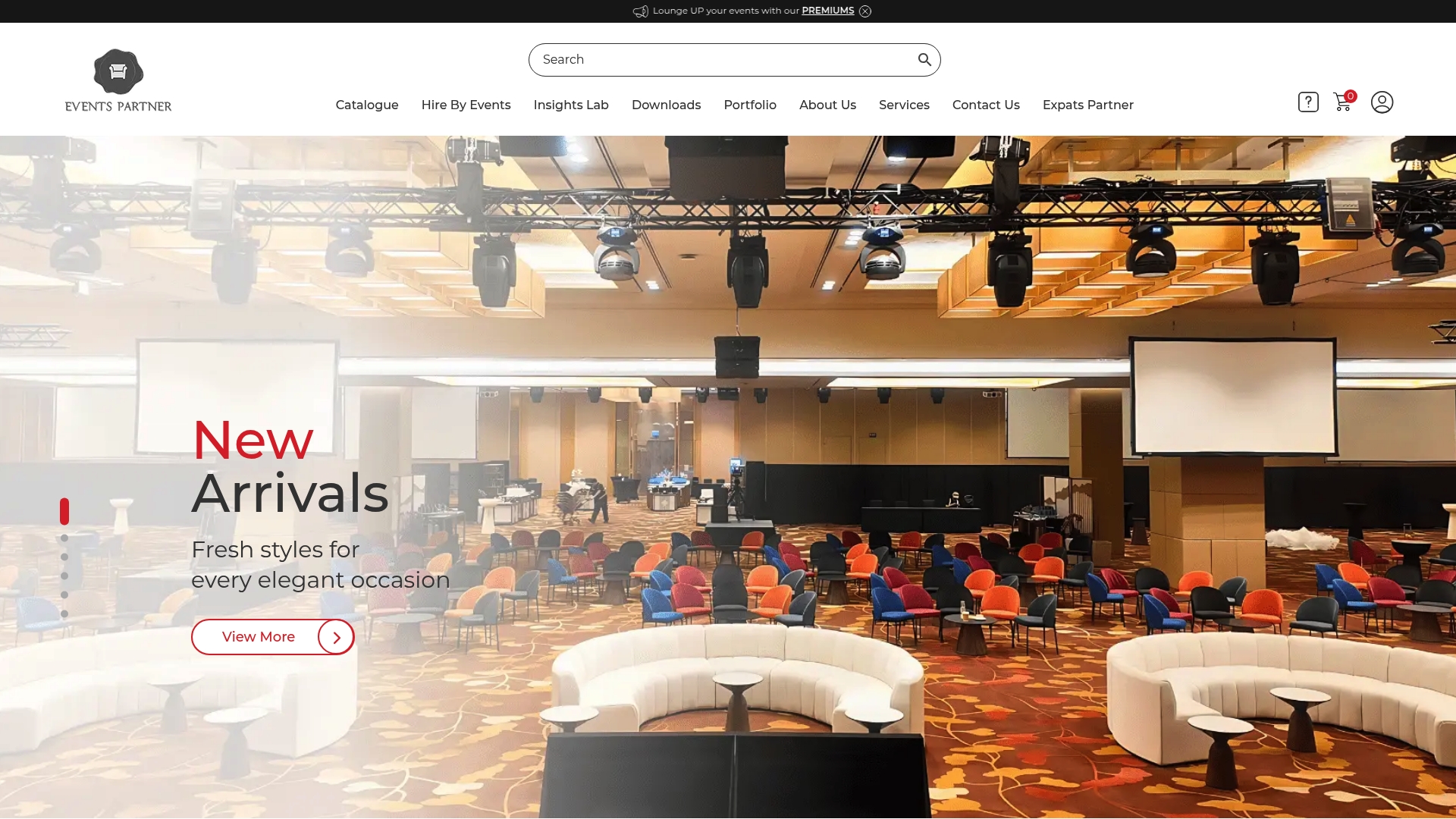
Events Partner supplies event furniture rental across Singapore for corporate events, exhibitions, conferences, gala dinners, and weddings. Every rental is backed by confirmed inventory, transparent pricing, and logistics coordinated to align with your installation schedule and buffer windows.
Furniture is delivered and collected according to your master timeline, with flexible pickup scheduling that fits post-event wrap-up requirements. For planners managing tight venue turnarounds, Events Partner’s fast venue turnaround support means your furniture arrives staged and ready, reducing the time your crew spends on physical placement. Whether you are planning a corporate event at a Singapore hotel ballroom or a multi-zone exhibition at a convention centre, Events Partner is your furniture infrastructure partner for every event.
FAQ
What is the standard buffer time for event setup?
Industry standards recommend a 25–30% buffer added to the total setup schedule, with a minimum of 1–2 hours reserved before complex tasks begin.
How much extra time should I plan for post-event teardown?
Teardown typically takes 20–30% longer than setup due to fatigue and compressed schedules, and requires approximately 20% more staff than the load-in phase.
What is reverse scheduling in event installation planning?
Reverse scheduling means building your timeline backwards from a fixed deadline, such as the event start time or venue clearance, so that every buffer protects a real milestone rather than an arbitrary start point.
Why should buffer time be shared with all vendors?
Unshared buffers create hidden delays that accumulate until the schedule collapses. Sharing buffer slots in the master timeline creates accountability and gives every vendor a clear picture of the full schedule.
How do I adjust buffer time for high-risk event setups?
High-risk setups such as exhibitions with rigging or large gala dinners require buffers of 50–100% of task duration, compared to 10–20% for straightforward meetings or networking events.
Used to monitor number of Google Analytics server requests when using Google Tag Manager
1 minute
__utma
ID used to identify users and sessions
2 years after last activity
__utmt
Used to monitor number of Google Analytics server requests
10 minutes
__utmb
Used to distinguish new sessions and visits. This cookie is set when the GA.js javascript library is loaded and there is no existing __utmb cookie. The cookie is updated every time data is sent to the Google Analytics server.
30 minutes after last activity
__utmc
Used only with old Urchin versions of Google Analytics and not with GA.js. Was used to distinguish between new sessions and visits at the end of a session.
End of session (browser)
__utmz
Contains information about the traffic source or campaign that directed user to the website. The cookie is set when the GA.js javascript is loaded and updated when data is sent to the Google Anaytics server
6 months after last activity
__utmv
Contains custom information set by the web developer via the _setCustomVar method in Google Analytics. This cookie is updated every time new data is sent to the Google Analytics server.
2 years after last activity
__utmx
Used to determine whether a user is included in an A / B or Multivariate test.
18 months
_ga
ID used to identify users
2 years
_gali
Used by Google Analytics to determine which links on a page are being clicked
30 seconds
_ga_
ID used to identify users
2 years
_gid
ID used to identify users for 24 hours after last activity
24 hours
_gac_
Contains information related to marketing campaigns of the user. These are shared with Google AdWords / Google Ads when the Google Ads and Google Analytics accounts are linked together.
90 days
Tawk.to Chat is a live chat support tool that enables real-time communication with website visitors.
This cookie is used to determine the connection duration of tawk sessions.
session
tawkUUID
This cookie is used to collect information about how the visitor handles the live chat function on the website.
10 years
TawkCookie
Main Tawk.to cookie.
session
__tawkuuid
Tawk.to cookie used to distinguish users.
10 years
twk_uuid_*
Stores the visitor identifier that Tawk.to uses to recognize a returning visitor and link them to their earlier chat history. The name ends with the site's own Tawk.to property ID.
180 days
Tawk_*
Stores the visitor's chat session details so an ongoing conversation continues as the visitor moves between pages. The name ends with the site's own Tawk.to property ID.
180 days
twk_idm_key
Holds a single use key that prevents the same chat session from being registered twice when the widget reconnects.
session
SourceBuster is used by WooCommerce for order attribution based on user source.
Name
Description
Duration
sbjs_session
The number of page views in this session and the current page path
30 minutes
sbjs_udata
Information about the visitor’s user agent, such as IP, the browser, and the device type
session
sbjs_first
Traffic origin information for the visitor’s first visit to your store (only applicable if the visitor returns before the session expires)
session
sbjs_current
Traffic origin information for the visitor’s current visit to your store
session
sbjs_first_add
Timestamp, referring URL, and entry page for your visitor’s first visit to your store (only applicable if the visitor returns before the session expires)
session
sbjs_current_add
Timestamp, referring URL, and entry page for your visitor’s current visit to your store
session
sbjs_migrations
Technical data to help with migrations between different versions of the tracking feature
session
Marketing cookies are used to follow visitors to websites. The intention is to show ads that are relevant and engaging to the individual user.
AddToAny provides share and follow buttons that let visitors post your pages to social networks, messaging apps, and bookmarking services.


 Buffer duration scales with event risk and complexity. High-risk setups such as large-scale exhibitions or gala dinners with rigging may require buffers of 50–100% of the estimated task duration. Low-risk setups such as a small boardroom conference need only 10–20%. The practical implication is that a task estimated at two hours for a high-complexity exhibition should carry a one to two hour buffer on top of that estimate.
Delays often arise from vendors arriving out of sequence. When the audio-visual crew arrives before the furniture is in place, both teams stall at the same loading dock. Layering setup tasks in logical order, starting with infrastructure, then technical equipment, then décor, prevents this kind of resource conflict. Buffer time between each layer gives each crew room to finish cleanly before the next begins.
Buffer duration scales with event risk and complexity. High-risk setups such as large-scale exhibitions or gala dinners with rigging may require buffers of 50–100% of the estimated task duration. Low-risk setups such as a small boardroom conference need only 10–20%. The practical implication is that a task estimated at two hours for a high-complexity exhibition should carry a one to two hour buffer on top of that estimate.
Delays often arise from vendors arriving out of sequence. When the audio-visual crew arrives before the furniture is in place, both teams stall at the same loading dock. Layering setup tasks in logical order, starting with infrastructure, then technical equipment, then décor, prevents this kind of resource conflict. Buffer time between each layer gives each crew room to finish cleanly before the next begins.
 The layering approach structures installation into four distinct phases: infrastructure (furniture, staging, flooring), technical (AV, lighting, power), aesthetic (décor, floral, signage), and final checks. Each phase ends with a quality gate before the next begins. This structure makes buffer time more effective because delays in one phase do not automatically cascade into the next.
Mapping logistic flows is equally critical. Identify every physical constraint at your venue: loading dock hours, lift capacity, corridor widths, and access restrictions. Singapore venues such as hotel ballrooms at the Raffles City Convention Centre or atrium spaces in Orchard Road malls each carry specific access rules that affect how much buffer you need at each transition point. A master event timeline that includes these constraints gives every vendor a shared reference point.
The layering approach structures installation into four distinct phases: infrastructure (furniture, staging, flooring), technical (AV, lighting, power), aesthetic (décor, floral, signage), and final checks. Each phase ends with a quality gate before the next begins. This structure makes buffer time more effective because delays in one phase do not automatically cascade into the next.
Mapping logistic flows is equally critical. Identify every physical constraint at your venue: loading dock hours, lift capacity, corridor widths, and access restrictions. Singapore venues such as hotel ballrooms at the Raffles City Convention Centre or atrium spaces in Orchard Road malls each carry specific access rules that affect how much buffer you need at each transition point. A master event timeline that includes these constraints gives every vendor a shared reference point.
 Events Partner supplies event furniture rental across Singapore for corporate events, exhibitions, conferences, gala dinners, and weddings. Every rental is backed by confirmed inventory, transparent pricing, and logistics coordinated to align with your installation schedule and buffer windows.
Furniture is delivered and collected according to your master timeline, with flexible pickup scheduling that fits post-event wrap-up requirements. For planners managing tight venue turnarounds, Events Partner’s fast venue turnaround support means your furniture arrives staged and ready, reducing the time your crew spends on physical placement. Whether you are planning a corporate event at a Singapore hotel ballroom or a multi-zone exhibition at a convention centre, Events Partner is your furniture infrastructure partner for every event.
Events Partner supplies event furniture rental across Singapore for corporate events, exhibitions, conferences, gala dinners, and weddings. Every rental is backed by confirmed inventory, transparent pricing, and logistics coordinated to align with your installation schedule and buffer windows.
Furniture is delivered and collected according to your master timeline, with flexible pickup scheduling that fits post-event wrap-up requirements. For planners managing tight venue turnarounds, Events Partner’s fast venue turnaround support means your furniture arrives staged and ready, reducing the time your crew spends on physical placement. Whether you are planning a corporate event at a Singapore hotel ballroom or a multi-zone exhibition at a convention centre, Events Partner is your furniture infrastructure partner for every event.



 Delivery Fees
 Payment Methods
 FAQ
FAQ