

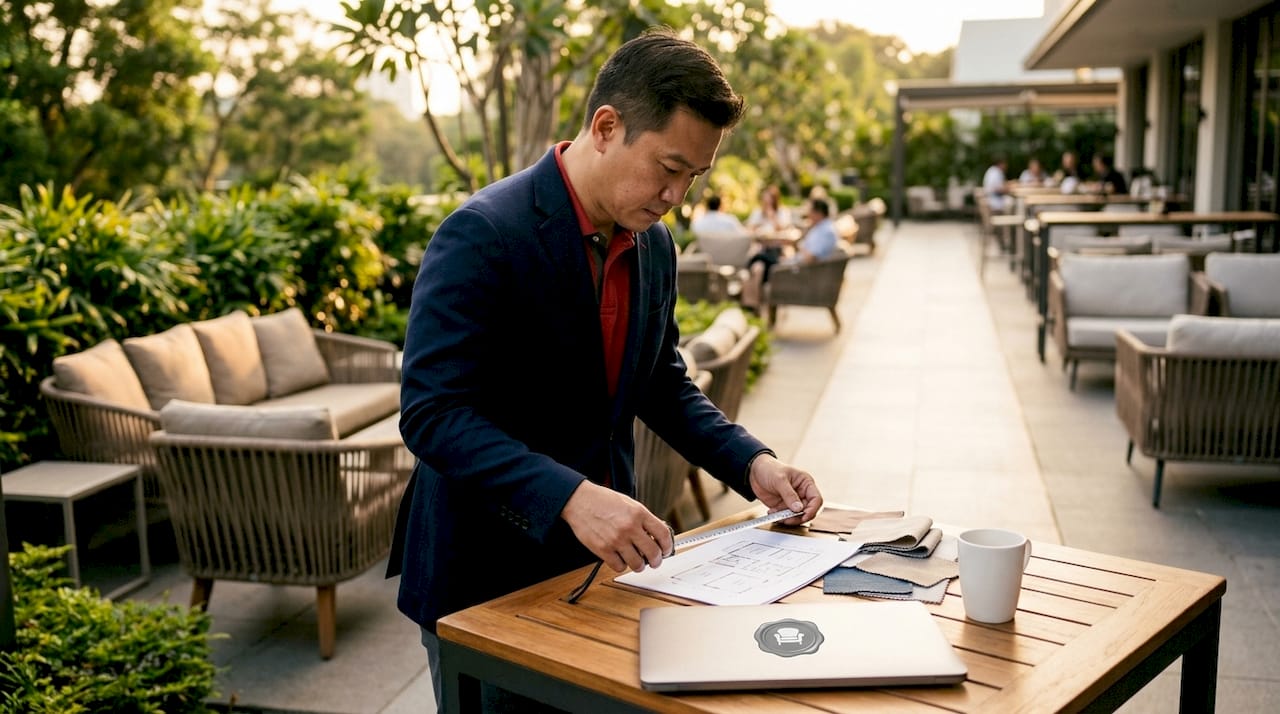
Setting up lounge furniture for a private club event is defined by three decisions: what you select, how you arrange it, and how you coordinate delivery. Get all three right, and guests linger, conversations flow, and the space feels considered rather than assembled. Get any one wrong, and even the most expensive furniture looks like an afterthought. This guide covers the types of lounge furniture suited to Singapore’s private club settings, layout principles that encourage mingling without blocking sightlines, and the logistics steps that prevent day-of surprises. Events Partner has compiled this from direct experience working with event planners across Singapore’s hospitality venues.
The standard industry term for this process is lounge area design and installation, and it covers everything from furniture specification to final placement on the event floor. For private club events in Singapore, venues such as hotel function rooms, members’ clubs, and private dining spaces add specific constraints: narrow loading corridors, strict delivery windows, and décor standards that demand furniture quality above what you would accept at a trade show.
The goal of a well-executed lounge setup is not to fill space. It is to create zones where guests feel comfortable enough to stop moving and start talking. That distinction drives every decision in this guide.
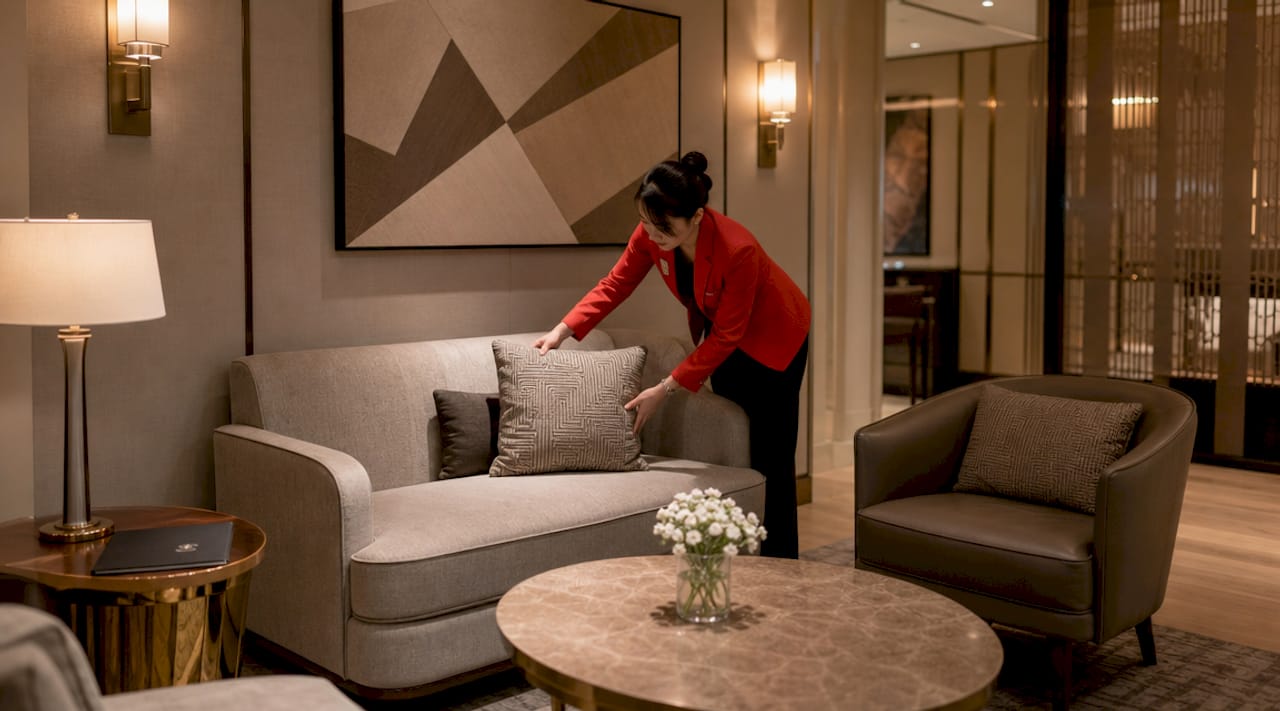
The core pieces for private event seating in a club setting are sofas, loveseats, accent chairs, ottomans, and low coffee tables. Each plays a different role in the cluster, and each has dimensions you need to account for before committing to a floor plan.
Standard sofa widths range from 78 to 90 inches, while loveseats measure 48 to 66 inches wide. These figures matter because a single sofa in a compact private club room can consume more floor area than planners expect, leaving insufficient clearance for guest movement.
| Furniture piece | Typical width | Best use in club setting |
|---|---|---|
| Three-seater sofa | 78–90 inches | Anchor piece for main cluster |
| Loveseat | 48–66 inches | Secondary seating or breakout zone |
| Accent chair | 28–34 inches | Flexible fill; pairs with ottomans |
| Ottoman or pouf | 18–24 inches | Footrest, extra seat, or side surface |
| Low coffee table | 36–48 inches | Central anchor for cluster |
Material choice is equally important. Performance fabric and leather upholstery are preferred for high-traffic private club events because they resist staining, wipe clean between sessions, and hold their appearance across a multi-hour event. Velvet and linen look striking in photographs but absorb spills and show wear quickly in a busy room.
Modular lounge seating is the most practical choice for venues with irregular floor plans or multiple function zones. Individual modular units can be reconfigured on the day without tools, which means you can respond to a last-minute room change or adjust seating density if guest numbers shift. For Singapore planners working in venues with L-shaped rooms or columns that interrupt sightlines, this flexibility is not optional. It is a planning requirement.
Pro Tip: Request exact dimensions from your rental supplier before finalising the floor plan. A 90-inch sofa that looks proportionate in a showroom can overwhelm a 400-square-foot function room. Always work from scaled drawings.

The standard conversation cluster comprises one sofa, two accent chairs, and one central table. This ratio creates a defined social unit that seats four to five guests comfortably without the cluster becoming so large that it fragments into separate conversations. For a private club event with 60 to 80 guests, four to six of these clusters, distributed across the room, gives every guest a place to settle without crowding any single zone.
Arrangement follows three principles:
Preserve sightlines. Clear sightlines to stages and bars increase guest engagement and improve event flow. Position clusters so that seated guests face the room’s focal point, whether that is a presentation screen, a cocktail bar, or a live performance area. Clusters arranged with their backs to these features reduce interaction and make guests feel disconnected from the event.
Respect traffic corridors. Leave at least 90 centimetres of clearance between clusters and between clusters and walls. This is the minimum width for comfortable two-way pedestrian movement and is particularly important near bar queues and buffet stations, where foot traffic concentrates.
Layer décor to define zones. Rugs anchoring furniture clusters visually separate lounge zones from open floor space and create a sense of arrival when guests enter a cluster. A rug that extends 12 to 18 inches beyond the furniture footprint unifies the grouping and signals that the space is intentional. Pair this with pendant lighting or floor lamps to reinforce the zone boundary without building physical barriers.
Oversized sofas overwhelm small venues, so scale your anchor pieces to the room. A three-seater sofa in a 300-square-foot breakout room leaves no space for the accent chairs that complete the cluster. In tighter spaces, two loveseats facing each other with a low table between them achieves the same social dynamic at a smaller footprint.
Comfort needs also vary by guest demographic. A deep, low sofa works well for younger guests but can be difficult for older or less mobile attendees to rise from. For private club events with mixed age groups, include at least one higher-profile accent chair per cluster to give guests a choice. This is a detail that rarely appears in mood boards but consistently affects guest experience.
Pro Tip: Sketch your cluster positions on a scaled floor plan before confirming your furniture order. Mark the sightlines to the stage and bar, then check that no cluster back faces these points directly. This takes 20 minutes and prevents the most common layout mistake.
For more on how furniture placement affects guest interaction, the networking layout guide from Events Partner covers this in detail for business event contexts.
Logistics is where most private club event setups fail. The furniture is right, the layout is planned, but the delivery arrives late, the loading dock is blocked, or the setup crew does not have the floor plan. Each of these problems is preventable with a clear process.
The key steps are:
For guidance on scheduling and cost implications of delivery logistics, the Events Partner article on lorry delivery planning is a practical reference for Singapore event managers.
Pro Tip: Assign one person on your team as the on-site furniture contact. This person holds the floor plan, liaises with the delivery crew, and has authority to approve minor reconfigurations. Without a single point of contact, setup decisions get delayed and clusters end up in the wrong positions.
Selecting a rental supplier for luxury lounge furniture at a private club event requires more scrutiny than a standard corporate booking. The furniture will be seen up close by guests who are accustomed to high-quality environments, and any visible wear, staining, or mismatched pieces will reflect on the event.
The questions to ask before confirming a supplier are:
Rental providers should be questioned about upholstery durability and on-site cleaning capabilities, especially for high-traffic clubs, to protect furniture appearance during multi-day events. This is particularly relevant for gala dinners or multi-session club events where the furniture is in continuous use across an evening.
Pro Tip: Ask your supplier for a reference from a comparable private club event in Singapore. A supplier who has delivered to a hotel ballroom or members’ club before will have solved the access and protocol problems that catch first-time suppliers off guard.
For a broader overview of lounge furniture options suited to Singapore hospitality settings, the Events Partner Singapore planner’s lounge guide covers furniture categories and selection criteria in detail.
Successful lounge furniture setup for a private club event requires selecting the right pieces, arranging them in conversation clusters that preserve sightlines, and coordinating delivery logistics with precision at least two hours before guests arrive.
| Point | Details |
|---|---|
| Select furniture by dimension | Sofas run 78 to 90 inches wide; confirm measurements against your floor plan before ordering. |
| Use the cluster formula | One sofa, two accent chairs, and one table creates the standard social unit for four to five guests. |
| Preserve sightlines | Position clusters so seated guests face the stage or bar, not away from the event’s focal points. |
| Build in delivery time | Allow a minimum two-hour window before guest arrival to handle loading, access, and setup. |
| Vet your supplier thoroughly | Confirm upholstery quality, cleaning policies, setup crew provision, and venue experience before signing. |
After working with event planners across Singapore’s private clubs, hotel ballrooms, and members’ venues, the pattern that repeats most often is this: planners treat the lounge setup as the last item on the checklist rather than a structural part of the event design. The furniture gets ordered after the catering, the AV, and the décor, which means it arrives with the least planning time and the most assumptions.
The second most common mistake is ignoring the relationship between furniture scale and room size. A sofa that photographs beautifully in a supplier’s showroom can make a 400-square-foot private dining room feel like a furniture warehouse. Scale is not about choosing smaller pieces. It is about choosing pieces proportionate to the space and the cluster, then leaving enough clearance for guests to move naturally.
The third mistake is underestimating access logistics. Singapore’s private clubs are not exhibition halls. Loading docks are shared, lifts have weight limits, and some venues prohibit trolleys on certain floor surfaces. Planners who treat furniture delivery like a standard courier drop-off consistently face delays that compress setup time and force rushed cluster placements.
The advice that actually works is straightforward: integrate the lounge setup into your event design from the first planning meeting, not the week before. Treat the floor plan as a live document that your furniture supplier, venue coordinator, and décor team all reference. And choose a rental partner who has delivered to comparable venues before, because their experience with access constraints is worth more than a lower day rate.
— Events Partner
Events Partner provides lounge furniture rental for private club events across Singapore, with a catalogue that includes modular sofas, loveseats, accent chairs, ottomans, and low coffee tables suited to hospitality-grade settings. Every rental includes logistics coordination, scaled floor plan support, and a setup crew familiar with Singapore’s private club and hotel venues.
Whether you are planning a gala dinner at a members’ club, a VIP networking evening at a hotel ballroom, or a private brand activation, Events Partner handles the furniture infrastructure so you can focus on running the event. View the full catalogue and request a quote at eventspartner.com.sg, or contact the team directly for venue-specific advice.
The standard cluster comprises one sofa, two accent chairs, and one central table, seating four to five guests. This ratio balances intimacy with capacity and works across most private club room sizes.
Allow a minimum two-hour delivery window before guest arrival, plus additional time if the venue has shared loading docks or restricted lift access. Confirm access details with the venue at least 48 hours before the event.
Performance fabric and leather are the most durable options for busy club settings. Both resist staining, clean quickly between sessions, and maintain their appearance across a full event evening.
Modular seating is the better choice for most Singapore private club venues because it allows last-minute reconfiguration if guest numbers change or the initial layout proves suboptimal. Fixed pieces work well as anchor sofas when the room layout is confirmed well in advance.
Ask suppliers about upholstery maintenance, setup crew provision, damage policies, and experience with comparable Singapore venues. A supplier familiar with private club access constraints will deliver and set up more reliably than one whose experience is limited to open exhibition halls.



 Fleet Deployment Rates
 Payment Methods
 FAQ
FAQ