


MICE event furniture rental is the process of selecting, arranging, and managing furniture to meet the specific operational and comfort requirements of conferences, exhibitions, and trade shows. For event planners in Singapore, it is one of the most consequential logistical decisions you will make. Get it right and your attendees barely notice the furniture. Get it wrong and they notice nothing else. This guide covers cost planning, layout strategies, scheduling, furniture selection, and the placement principles that separate a well-run event from a frustrating one.
Renting furniture for MICE events can reduce costs by 40–60% compared to purchasing outright, with delivery, installation, and removal included in the rental fee. That figure matters because it means your budget goes further on AV, catering, and speaker fees rather than on assets you will store in a warehouse for eleven months. For a single conference at Marina Bay Sands or Suntec City Convention Centre, the logistics savings alone justify the rental model.
The financial case is straightforward, but the operational case is equally strong:
For planners managing multiple events annually across venues like the Singapore Expo or Raffles City Convention Centre, corporate event furniture rental removes the capital expenditure entirely and converts it into a predictable per-event cost.
Pro Tip: Request an itemised quote that separates furniture, delivery, setup, and teardown fees. Transparent pricing lets you compare providers accurately and avoids surprise charges on event day.
Layout planning is the most underestimated part of the exhibition furniture guide. The furniture arrangement determines how attendees move, interact, focus, and feel throughout the day. A poor layout creates congestion, dead zones, and discomfort. A well-planned one makes the event feel effortless.
The four most common conference layouts each serve a different purpose:
Large conferences typically use two or more layouts to cater for plenary sessions and smaller breakout rooms, with approximately 30 minutes required to flip a room between configurations. This is where modular furniture proves its value. Pieces that reconfigure quickly reduce that 30-minute flip to a manageable, predictable operation rather than a scramble.
AV equipment mapping must happen before you finalise any furniture layout. Screens, projectors, and speaker positions dictate where chairs can and cannot go. Skipping this step creates sightline problems that no amount of last-minute rearranging can fully fix.

Ergonomic seating directly impacts attendee comfort and engagement, particularly for full-day conferences. Prioritise chairs with lumbar support and appropriate seat depth over chairs chosen purely for their visual appeal.
Pro Tip: Walk the venue floor plan with your AV team before confirming any furniture order. Mark screen positions, speaker locations, and power points on the plan first. Then build the furniture layout around those fixed points.
Timing is where most MICE event furniture plans fail. The planning window, setup sequence, and teardown buffers all require more lead time than most planners initially allow.

Furniture rental planning should begin 6–12 weeks before the event, with onsite setup completed 1–2 days in advance. That timeline gives you room to confirm quantities, adjust layouts after venue walkthroughs, and resolve any access or loading bay issues before event day.
| Phase | Recommended timing | Key action |
|---|---|---|
| Initial planning | 6–12 weeks out | Confirm layout, quantities, and provider |
| Venue walkthrough | 4 weeks out | Check access, load capacity, power points |
| Final order confirmation | 2–3 weeks out | Lock quantities and delivery schedule |
| Onsite setup | 1–2 days before | Furniture installed and tested |
| Teardown buffer | 30–60 minutes post-event | Allow buffer before removal begins |
Scheduling teardown only after venue clearance, with a 30–60 minute buffer, reduces the risk of operational delays and congestion at loading bays. This is especially relevant at busy venues like the Singapore Expo, where multiple events may share loading facilities on the same day.
Key logistics checks to complete before event day:
Pro Tip: Build a 30-minute contingency buffer into every setup phase. Lifts get busy, loading bays get congested, and furniture occasionally arrives in a different sequence from the delivery manifest. A buffer costs nothing and saves considerable stress.
The right furniture depends on the event format, the venue, and the attendee experience you are designing. A corporate conference at a hotel ballroom has different requirements from a trade show booth at the Singapore Expo.
| Event type | Recommended furniture | Key consideration |
|---|---|---|
| Corporate conference | Ergonomic chairs, rectangular conference tables, lectern | Lumbar support for full-day sessions |
| Trade show / exhibition | High bar tables, stools, display counters, lounge seating | Brand colour alignment, compact footprint |
| Gala dinner | Round banquet tables, Tiffany chairs, cocktail tables | Cabaret layout, visual consistency |
| Networking event | Cocktail tables, lounge sofas, bar stools | Traffic flow, conversation-friendly spacing |
| Product launch | Lounge seating, display plinths, branded counters | Brand identity, media sightlines |
For trade show furniture, compact and brand-aligned pieces perform best. High bar tables and stools encourage standing conversations, which keeps booth traffic moving. Lounge seating works well for VIP areas or longer product demonstrations.
Tech-enabled furniture is increasingly standard at Singapore MICE events. Charging stations built into tables, LED-lit bar counters, and backlit display units all require the electrical load checks mentioned above. Confirm power capacity before ordering these pieces, not after.
Sustainable and modular furniture options are worth requesting from your provider. Modular pieces reconfigure between sessions without specialist tools, which directly supports the fast venue turnarounds that multi-session conferences demand. Sustainability credentials are also increasingly relevant for corporate clients with ESG reporting requirements.
Furniture placement determines how attendees move through your event, where they gather, and whether they feel comfortable or constrained. The arrangement is not a finishing detail. It is a functional decision with direct consequences for engagement and satisfaction.
The most effective conference and exhibition layouts create distinct zones: a presentation zone, a networking zone, a break zone, and, where relevant, a VIP or media zone. Each zone has a different furniture requirement and a different traffic flow logic. Mixing zones without clear physical definition creates confusion and congestion.
“The biggest mistake I see at Singapore MICE events is treating the floor plan as a furniture storage problem rather than a guest experience design. Every chair placement is a decision about where people will look, move, and connect.”
AV sightlines must guide furniture layout decisions to prevent dead zones where attendees cannot see or hear the speaker. A dead zone is not just an inconvenience. It signals to the attendee that their experience was not considered. At a paid conference or a high-stakes exhibition, that impression is difficult to recover from.
Traffic flow design is equally important. Aisles between furniture rows should be wide enough for two people to pass comfortably, and emergency exit routes must remain clear at all times. At venues like Suntec City or Marina Bay Sands, venue operations teams will flag these issues during setup. At smaller venues, the responsibility falls entirely on the planner.
How furniture layout influences networking is a subject worth studying before your next event. Cocktail tables placed at conversation distance, lounge clusters angled toward each other, and break areas positioned away from the main presentation zone all encourage the organic interaction that delegates value most from MICE events.
Successful MICE event furniture rental requires early planning, layout discipline, and close coordination between furniture, AV, and venue operations teams.
| Point | Details |
|---|---|
| Start planning early | Begin furniture rental planning 6–12 weeks before the event to secure inventory and resolve logistics. |
| Rental reduces costs significantly | Renting cuts costs by 40–60% versus buying, with delivery and setup included in the fee. |
| Map AV before finalising layouts | Confirm screen and speaker positions before ordering furniture to prevent sightlines problems. |
| Assign zone ownership | Designate a lead staff member per event zone to maintain setup accountability on event day. |
| Choose ergonomic over aesthetic | Prioritise chairs with lumbar support for full-day conferences; comfort drives delegate satisfaction. |
The most consistent mistake I see is planners treating furniture as the last item on the checklist rather than one of the first. By the time furniture is being ordered, the AV layout is already fixed, the venue walkthrough has not happened, and the timeline has compressed to the point where modular options are no longer available from the provider.
The second mistake is underestimating teardown. Planners spend weeks on setup and thirty minutes on teardown planning. A congested loading bay at 10pm at the Singapore Expo, with three events finishing simultaneously, is a real scenario. The 30–60 minute buffer is not padding. It is risk management.
Ergonomics consistently gets sacrificed for aesthetics, particularly at high-profile corporate events where the client wants the room to look impressive. A chair that looks good in a mood board but lacks lumbar support becomes a problem by 2pm on day one of a two-day conference. Attendees notice. They mention it in post-event surveys. Prioritise function first and find furniture that delivers both.
The planners who run the smoothest events treat their furniture provider as a logistics partner, not a supplier. Early communication, shared floor plans, and a confirmed delivery sequence make the difference between a setup that runs on time and one that does not.
— Events Partner
Events Partner supplies modern, ergonomic furniture for conferences, exhibitions, trade shows, and corporate events across Singapore. The catalogue covers everything from conference chairs and rectangular tables to lounge seating, cocktail tables, bar counters, and display units.
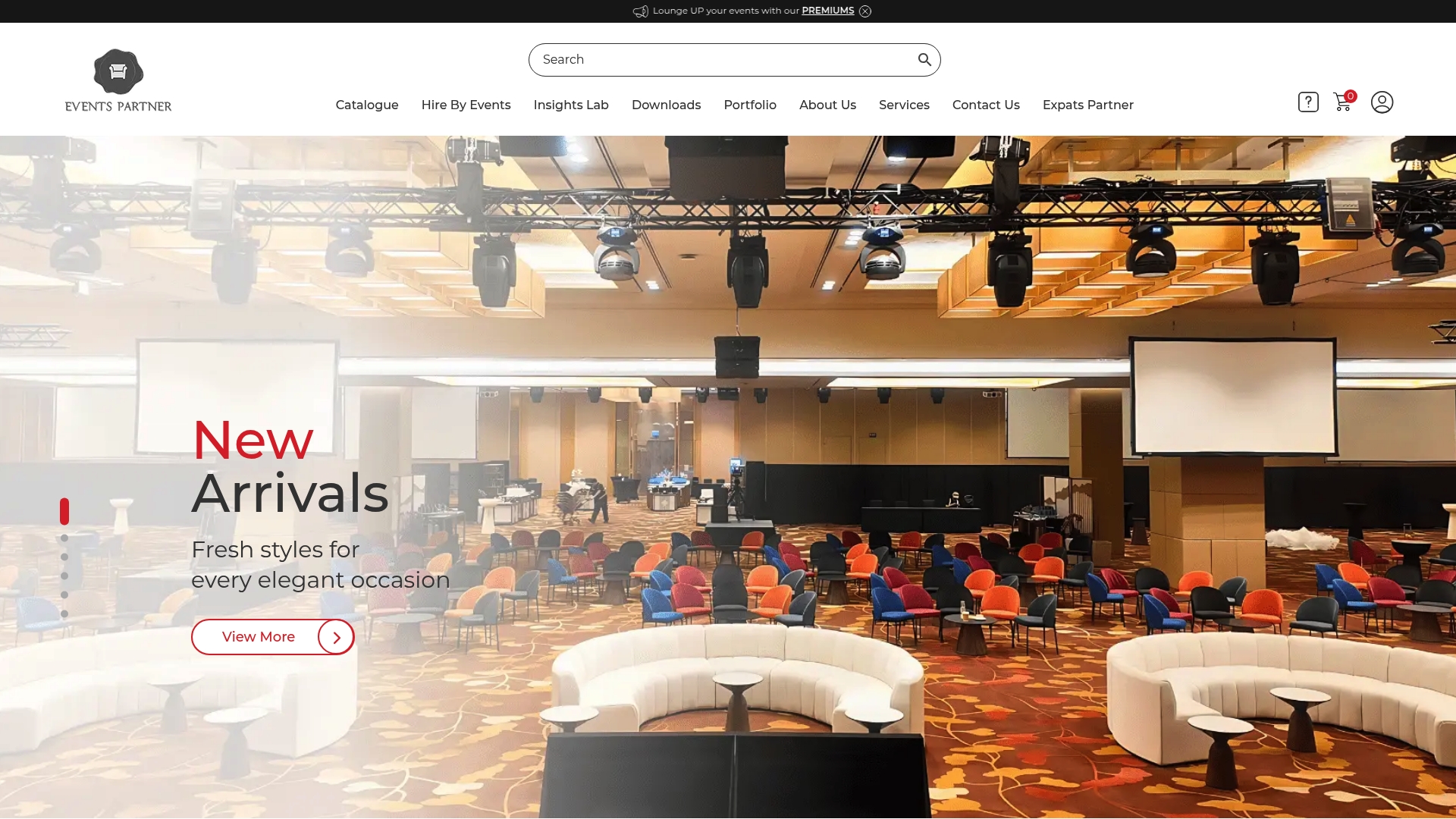
Every rental includes delivery, professional setup, and removal, so your team can focus on running the event rather than managing logistics. Whether you are planning a 50-person boardroom session or a 1,000-delegate exhibition at the Singapore Expo, Events Partner provides the inventory, the logistics, and the planning support to keep your setup on schedule. Explore the full range on the event furniture rental page, or go directly to conference furniture rental for conference-specific options and transparent pricing.
Book 6–12 weeks before the event to secure your preferred inventory and allow time for venue walkthroughs and layout adjustments. Final setup should be completed 1–2 days before the event begins.
Renting reduces costs by 40–60% compared to purchasing, with delivery, installation, and removal typically included. The saving is higher when you factor in storage and maintenance costs for owned furniture.
Theatre style suits keynote sessions, classroom style works for workshops, and cabaret style fits hybrid conference-dinner formats. Large conferences use two or more layouts, with modular furniture enabling room flips in approximately 30 minutes between sessions.
Yes. Verify total electrical load capacity, not just outlet count, before ordering charging stations, LED-lit counters, or any powered furniture. Insufficient load capacity is one of the most common and avoidable setup failures at Singapore venues.
MICE furniture rental refers specifically to furniture for Meetings, Incentives, Conferences, and Exhibitions. It prioritises ergonomic seating for long sessions, modular configurations for multi-format programmes, and brand-aligned aesthetics suited to corporate and professional audiences, rather than the decorative focus of wedding or social event furniture.



 Fleet Deployment Rates
 Payment Methods
 FAQ
FAQ