Getting your cost estimates quickly is not just a matter of convenience. For event planners and organisers in Singapore, why getting immediate costing is important for events comes down to one hard truth: the longer you wait, the more expensive and uncertain everything becomes. Vendor quotes are shrinking in validity. Prices fluctuate faster than ever. And every day you delay a confirmed budget is a day your planning decisions rest on guesswork. This article breaks down the real risks of delayed costing, the strategic advantages of moving fast, and practical steps you can act on today.
Vendor quotes now expire in as little as 15 days, making immediate costing a practical necessity.
Delayed costing causes budget blowouts
Without early estimates, final costs routinely exceed initial projections by 30 to 40 per cent.
Fast costing builds trust and saves money
Responding to costs within minutes wins vendor deals and prevents paying premium rates for rushed orders.
Contingency funds need structure
Categorise your contingency budget by risk type, not as a generic lump sum, for better forecast accuracy.
Scope clarity reduces inflated quotes
Providing detailed service scope documents prevents vendors from quoting high to cover uncertainty.
Pricing volatility and quote validity in 2026
Here is something that catches even experienced planners off guard. The rules around vendor quote validity have changed dramatically. Quote validity has dropped from what used to be a year-long window to as few as 15 days in 2026. What this means practically is that a quote you received two weeks ago may already be irrelevant by the time you present it to a client or finance team.
Global supply pressures, shipping costs, and material price swings have introduced what analysts now call “price whiplash.” Furniture, audio-visual equipment, catering supplies, and logistics costs are all subject to rapid repricing. If you base your event budget on figures gathered too early, or worse, too late, the gap between estimate and actual spend can become painfully wide.
Factor
Old environment (pre-2024)
Current environment (2026)
Quote validity period
Up to 12 months
As few as 15 days
Price movement frequency
Quarterly adjustments
Weekly or fortnightly changes
Risk of budget overrun
Low to moderate
High without immediate costing
Vendor availability window
Broad lead time
Short booking windows at peak periods
Pro Tip:Ask every vendor upfront how long their quote is valid. If the answer is under three weeks, treat that quote as perishable and confirm your budget decisions within days, not weeks.
The practical consequence of this volatile environment is that delayed costing no longer just creates minor budget variances. It creates inaccurate forecasts that ripple through every downstream decision, from choosing your venue to confirming your furniture rental package.
How early costing sharpens budgets and manages risk
One of the most consistent patterns in event planning failures is the absence of a properly funded contingency reserve. Poor contingency planning regularly pushes final invoices 30 to 40 per cent above initial estimates. The reason is usually not that the planner was careless. It is that they started the costing process too late to catch the risks in time.
When you get cost estimates early, you gain visibility into three categories of financial risk that are very difficult to see otherwise.
Hidden fees and surcharges. Many vendor quotes are placeholders. Requesting all-in quotes that include delivery, set-up, overtime, and service charges upfront prevents surprise 10 per cent-plus additions on the final invoice. Always ask what is not in the quote, not just what is.
Cancellation terms and minimum guarantees. These contractual obligations can represent significant exposure if your attendance numbers shift. Early visibility into cancellation terms allows you to negotiate better terms before you sign, not after.
Currency and availability risk. For multi-vendor events, costs can shift between quote and booking simply because of exchange rate movements or stock availability changes. Identifying these risks early gives you time to lock in prices or find alternatives.
The smartest approach to event budgeting treats costing as a decision-making tool, not an accounting exercise after all contracts are signed. Build your contingency fund as a structured line item. Categorise your contingency by specific risk types, such as currency exposure, supplier unavailability, or weather-related costs, rather than parking a vague percentage at the bottom of your spreadsheet.
Pro Tip:Set your contingency at 10 to 20 per cent of total projected spend, but split it across risk categories. A currency risk reserve and a logistics buffer serve very different purposes and should be tracked separately.
When you book furniture early, you also protect yourself against peak-period shortages that force planners into paying premium rates for whatever stock is still available. Early costing and early booking are two sides of the same strategy.
Speed as a strategic advantage in vendor and client negotiations
There is a number that should be pinned to every event planner’s desk: 78 per cent of buyers prefer working with the vendor who responds first within five minutes in competitive scenarios. This applies directly to how you manage your own vendor relationships. The planners who move fast get better terms, better availability, and better service.
Speed in costing is not just operational efficiency. It is a revenue driver and a trust signal. When a client asks you for a ballpark budget and you can come back with a credible, structured cost estimate the same day, you position yourself as someone who has their systems in order. That confidence translates directly into client trust and, frequently, into winning the brief.
Here is what fast costing prevents in practice:
The compromise tax. Last-minute planning forces you into paying premiums for sub-optimal vendors. You accept the caterer who is available rather than the one you wanted, or you rent furniture that does not quite fit the brief because your first choice is already booked. These compromises cost you money and reputation simultaneously.
Adversarial budget conversations. When costing is integrated early into client conversations, you reduce friction. Early costing during client engagement creates transparency that makes budget conversations collaborative rather than confrontational.
Reactive rather than strategic planning. When your numbers come in late, every decision becomes a reaction rather than a choice. You lose the ability to compare options because time pressure forces you to accept whatever is on the table.
“The planners who consistently deliver on budget are not the ones with the best spreadsheets. They are the ones who asked the right questions, to the right vendors, at the right time.”
Pair this mindset with smart vendor selection from the beginning, and you create a planning process that is resilient rather than reactive.
Practical steps to get immediate, accurate costing in Singapore
Getting fast, reliable cost estimates is a skill that can be built into your process. Here is a practical sequence that experienced planners in Singapore use.
Prepare a detailed scope of service document before approaching vendors. Vague briefs produce inflated quotes. Vendors quote higher when scope is unclear because they are pricing in the risk of unknown requirements. A two-page brief covering guest numbers, venue specifics, key furniture and equipment needs, set-up and breakdown times, and any logistical constraints cuts quotation inflation significantly.
Build vendor relationships before your peak planning periods. Vendors respond faster and more accurately to clients they know. If you are working on your first major event of the year, the worst time to introduce yourself to a new furniture rental company is when you need a quote by tomorrow morning. Invest time in these relationships during quieter periods.
Use standardised costing templates. Create a master template for each type of event you regularly organise: corporate conferences, product launches, roadshows, and networking events each have distinct cost profiles. A template means you can generate a first-pass budget within an hour rather than starting from scratch every time.
Schedule scenario modelling as part of your budget process. Build three versions of every event budget: a conservative version at 80 per cent of projected attendance, a base version, and a stretch version at 120 per cent. This means that if numbers shift, you already have a costed response ready rather than needing to rework everything from scratch.
Track variance between initial estimates and final invoices across events. This is the metric most planners ignore but should not. Tracking where your estimates deviate from actuals over time tells you which vendor categories carry the most pricing uncertainty, which is exactly where you need to invest in earlier, more detailed costing in future.
Pro Tip:For corporate events in Singapore, avoid common furniture planning mistakes by including delivery, set-up, teardown, and any after-hours surcharges in your initial cost request. These line items are frequently omitted from headline quotes and can add 15 per cent or more to the final bill.
The corporate event planning checklist approach is particularly useful here. Before confirming any rental, clarify every line item in writing, including what happens if your timeline shifts or if the venue has access restrictions that affect logistics.
My perspective on costing and why most planners get it wrong
I have seen enough events go sideways to know that procrastination on costing is the single most common root cause. Not the venue booking. Not the catering. The costing. When budgets are not confirmed early, every other decision happens in a vacuum, and planners end up managing crises instead of managing events.
What I have found is that the planners who are most successful treat their first cost estimate as a living document, not a one-time exercise. They update it weekly as new information comes in, they track variance in real time, and they communicate budget movements to their clients proactively. That habit alone removes most of the stress from event delivery.
The compromise tax is real and it is expensive. I have watched planners accept furniture that clashed with their brand aesthetic, catering suppliers who delivered below standard, and audio-visual setups that were half of what they specified, all because the budget was confirmed too late to secure the right vendors at the right price. Every one of those compromises had a downstream cost beyond the invoice itself.
My advice is simple: make costing the first thing you do, not the last. Build supplier relationships before you need them urgently. Get quotes in writing, ask what is not included, and build your contingency as a structured reserve, not an afterthought. If you make immediate costing a team habit rather than a personal discipline, your events will consistently land closer to budget, with fewer surprises and better outcomes.
— Events
How Eventspartner makes immediate costing straightforward
One of the most practical ways to speed up your event budgeting process is to work with suppliers who provide transparent, detailed quotes quickly. Eventspartner offers event furniture rental for the full range of Singapore events, from corporate conferences and exhibitions to weddings, gala dinners, and roadshows. Every quote is built to be all-in, covering delivery, set-up, and collection, so there are no hidden fees to reconcile after your event.
For corporate planners specifically, Eventspartner’s corporate event furniture rental service is structured to support fast decision-making, with clear pricing across a real, available inventory. That means when you present a budget to your client or finance team, the numbers are grounded in actual stock and confirmed rates, not estimates that could shift by the time you go to book.
Getting your furniture costs confirmed early with Eventspartner gives you one of the largest line items in your event budget locked in before the rest of your planning follows. Reach out today and get a detailed quote that gives your budget the solid foundation it needs.
FAQ
Why does immediate costing matter so much in 2026?
Vendor quote validity periods have dropped to as few as 15 days, meaning delayed costing leads to outdated figures and inaccurate budgets. Acting fast secures accurate pricing before market conditions shift.
What is the compromise tax in event planning?
The compromise tax refers to the higher costs and lower quality that result from last-minute vendor decisions. Rushed bookings force planners to accept available options rather than preferred ones, increasing spend and risking event quality.
How much contingency should I budget for an event?
Industry guidance recommends setting aside 10 to 20 per cent of total projected spend as a contingency fund, categorised by specific risk types such as logistics, availability, and currency movements rather than a single generic figure.
How do I get more accurate quotes from vendors?
Provide a detailed scope of service document before requesting quotes. Vendors quote higher when the brief is vague. A clear brief covering guest numbers, timeline, venue requirements, and key equipment needs produces more accurate and competitive pricing.
When should I start costing my event furniture?
As early as possible, ideally at the same time you shortlist your venue. Furniture availability and pricing can shift quickly during peak periods in Singapore, and early confirmation locks in rates and secures the stock you need.




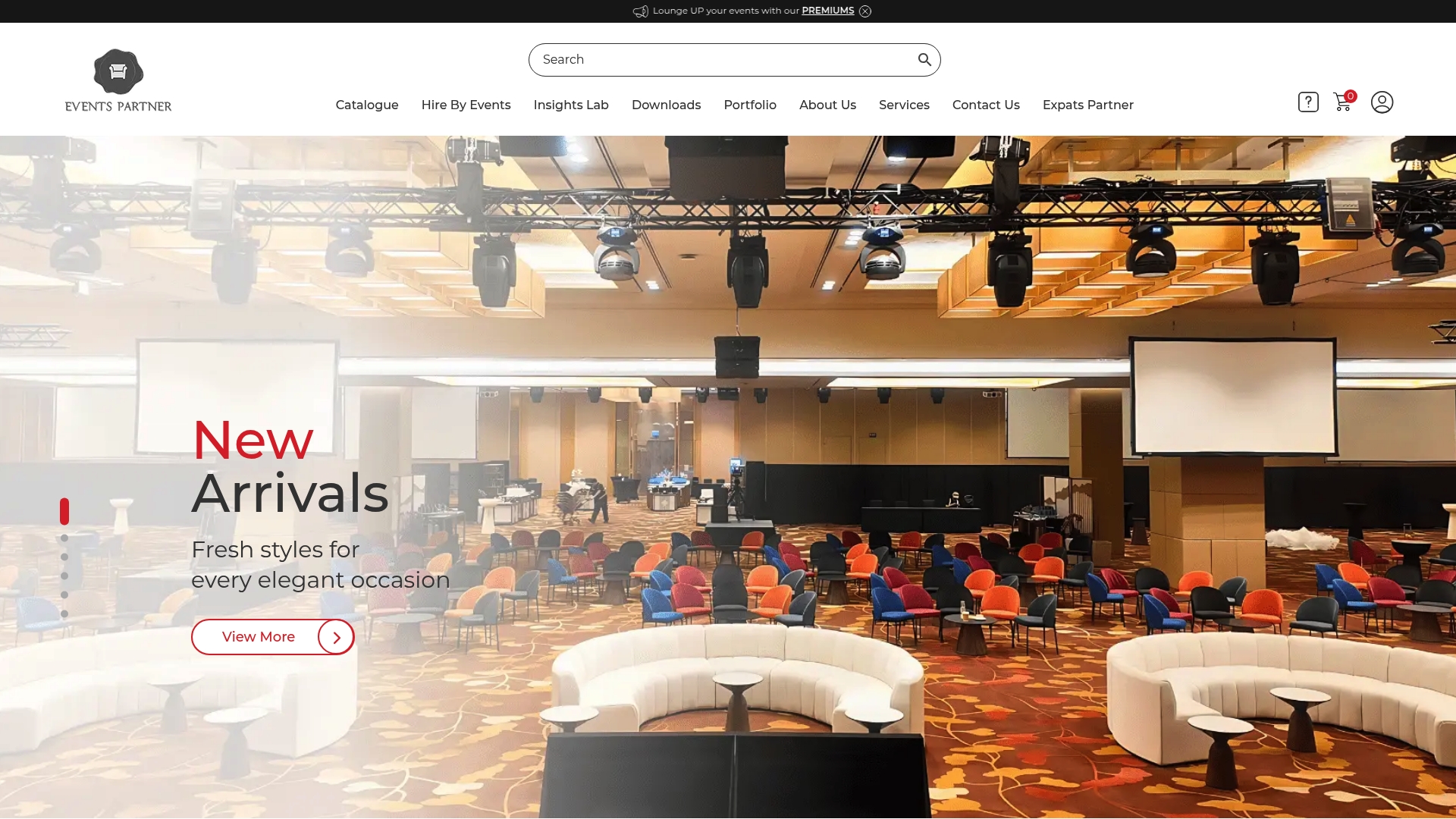 One of the most practical ways to speed up your event budgeting process is to work with suppliers who provide transparent, detailed quotes quickly. Eventspartner offers event furniture rental for the full range of Singapore events, from corporate conferences and exhibitions to weddings, gala dinners, and roadshows. Every quote is built to be all-in, covering delivery, set-up, and collection, so there are no hidden fees to reconcile after your event.
For corporate planners specifically, Eventspartner’s corporate event furniture rental service is structured to support fast decision-making, with clear pricing across a real, available inventory. That means when you present a budget to your client or finance team, the numbers are grounded in actual stock and confirmed rates, not estimates that could shift by the time you go to book.
Getting your furniture costs confirmed early with Eventspartner gives you one of the largest line items in your event budget locked in before the rest of your planning follows. Reach out today and get a detailed quote that gives your budget the solid foundation it needs.
One of the most practical ways to speed up your event budgeting process is to work with suppliers who provide transparent, detailed quotes quickly. Eventspartner offers event furniture rental for the full range of Singapore events, from corporate conferences and exhibitions to weddings, gala dinners, and roadshows. Every quote is built to be all-in, covering delivery, set-up, and collection, so there are no hidden fees to reconcile after your event.
For corporate planners specifically, Eventspartner’s corporate event furniture rental service is structured to support fast decision-making, with clear pricing across a real, available inventory. That means when you present a budget to your client or finance team, the numbers are grounded in actual stock and confirmed rates, not estimates that could shift by the time you go to book.
Getting your furniture costs confirmed early with Eventspartner gives you one of the largest line items in your event budget locked in before the rest of your planning follows. Reach out today and get a detailed quote that gives your budget the solid foundation it needs.



 Fleet Deployment Rates
 Payment Methods
 FAQ
FAQ