

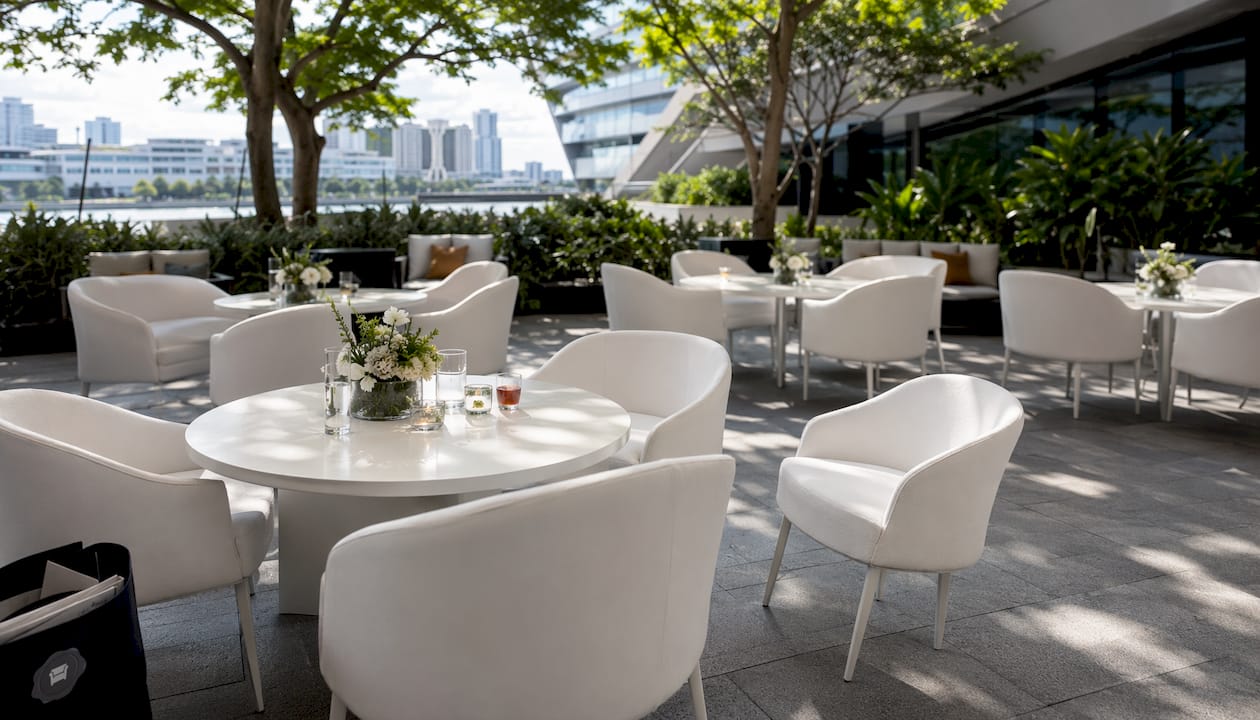
A furniture brief is the single document that prevents a supplier from arriving at Suntec City Convention Centre with bar stools when you needed banquet chairs for 400 guests. At its core, an event production furniture brief is a structured written document that specifies every furniture requirement for an event: types, quantities, styles, dimensions, delivery windows, and the design intent behind each choice. Without one, suppliers guess. With a clear brief, they can allocate the right inventory, price accurately, and show up prepared.
A well-written brief covers these core elements:
Suppliers who receive briefs with this level of detail consistently offer better inventory, sharper pricing, and fewer revision rounds. Professionalism on paper signals professionalism on the day.
Furniture falls into three broad categories: seating, tables, and lounge pieces. Each category serves a different function depending on the event format, and getting the match right is where selecting the right furniture starts.
| Furniture type | Corporate conference | Wedding / gala | Exhibition / trade show | Networking / roadshow |
|---|---|---|---|---|
| Banquet chair | ✓ Formal sessions | ✓ Primary seating | — | — |
| Chiavari / Tiffany chair | Occasional | ✓ Preferred | — | — |
| Folding / stacking chair | ✓ High-volume | ✓ Budget option | ✓ Seminar zones | ✓ Flexible |
| Round dining table | ✓ Gala dinners | ✓ Standard | — | — |
| Rectangular table | ✓ Boardroom style | ✓ Banquet rows | ✓ Display surface | ✓ Registration |
| Cocktail / poseur table | ✓ Receptions | ✓ Pre-dinner | ✓ Product display | ✓ Primary |
| Lounge sofa / ottoman | VIP zones | ✓ Bridal lounge | ✓ Networking pods | ✓ Primary |
Round tables promote conversation because every guest faces the centre. Rectangular tables pack more people into a ballroom at Raffles City or Marina Bay Sands, but they create rows that limit interaction. For a networking event at a mall atrium, modular lounge pieces and cocktail tables outperform traditional dining sets entirely.
Key features to specify by event type:
The brief should be readable in under ten seconds at a glance. Front-load the essentials: venue, date, and guest count appear on line one, not buried in paragraph four. Use a table for the furniture inventory rather than a prose list; a supplier scanning 30 briefs a day will thank you.
Structure your brief in this order:
Including mood boards and reference images significantly improves supplier interpretation. A supplier who can see your vision produces a more accurate proposal and needs fewer follow-up calls.
Do’s and don’ts for brief writing:
Pro Tip: A brief that fits on two pages with a furniture table and one mood board image gets faster, more accurate responses than a six-page document with dense paragraphs. Brevity is a form of professionalism.

Vague descriptions are the most frequent problem. “Elegant chairs” tells a supplier nothing; “white Chiavari chairs with ivory cushions, 80 units” tells them everything. The gap between those two instructions is the gap between a smooth setup and a frantic morning call at the loading dock.
Common pitfalls to avoid:
Early, clear briefs allow suppliers creative freedom and access to better inventory, particularly during Singapore’s busy MICE and wedding season. A brief submitted six weeks out gives you options; one submitted six days out gives you whatever is left.
Furniture is part of the event’s narrative, not just its infrastructure. A financial services firm hosting a client dinner at a hotel ballroom communicates very different values with sleek black lacquer tables and charcoal upholstered chairs than it does with mismatched rental pieces in beige. The furniture sets the tone before a single word is spoken.
Strategic use of colour, placement, and modular configurations creates distinct zones: a dining area, a networking lounge, a presentation stage. For Singapore’s multicultural guest base, accessible layouts with clear circulation paths matter as much as aesthetics. Outdoor events at venues like Gardens by the Bay require weather-resistant pieces that still look considered, not purely functional.
Key alignment criteria to include in your brief:
For corporate event furniture, the brief should explicitly state whether the furniture will appear in photography or broadcast, since finish and colour read differently on camera than in person.
Suppliers need numbers, not approximations. A brief that says “large round tables” leaves the supplier guessing between 1.5-metre and 1.8-metre diameters, which affects both the table count and the room layout entirely.
Standard specifications to include:
Attaching a scaled floor plan, even a rough one, removes ambiguity entirely. Venues like Sands Expo or the Singapore Expo have published floor plans that planners can annotate and share directly with the supplier.

Clear communication prevents the most common day-of problems. Assign one point of contact on your team for all furniture-related queries and make sure the supplier has that person’s direct mobile number, not just an email address.
Practical coordination tips:
For multi-venue furniture delivery, a single master brief with venue-specific appendices keeps all parties aligned without duplicating effort.
Logistics planning starts with the venue’s access rules, not the supplier’s availability. Some Singapore hotel ballrooms permit loading only between specific hours; convention centres like Suntec assign loading bays by time slot. Missing that window can delay the entire setup.
Build your logistics section around these considerations:
For large-scale events, a phased delivery schedule works better than a single bulk drop. Delivering chairs and tables in the first wave, then lounge pieces and accessories in the second, keeps the setup crew working efficiently without congestion. Detailed logistics planning for exhibitions follows the same principle: sequence the delivery to match the build order.

Events Partner provides modern event furniture rental across Singapore for corporate events, conferences, exhibitions, weddings, gala dinners, roadshows, and brand activations. The difference from a generic hire company is the planning support: Events Partner works with planners to review briefs, flag logistical gaps, and recommend configurations based on real venue experience at locations including hotel ballrooms, convention centres, and mall atriums.
Transparent pricing, a real inventory catalogue, and efficient delivery logistics mean you spend less time chasing confirmations and more time running your event. Whether you need 20 cocktail tables for a product launch or 500 banquet chairs for a gala dinner, Events Partner handles the brief review, delivery scheduling, and on-site coordination as part of the service. Get a quote through AutoQuote™ or contact the team directly to discuss your next event.
A detailed, well-structured furniture brief is the single most effective way to prevent supplier errors, control costs, and produce a setup that matches your event’s design intent.
| Point | Details |
|---|---|
| Brief structure matters | Front-load venue, date, and guest count; use a furniture inventory table rather than prose lists. |
| Table geometry affects interaction | Round tables promote conversation; rectangular tables maximise capacity in ballrooms and conference halls. |
| Specifications need numbers | State exact dimensions, quantities, and colour codes; avoid subjective descriptors like “elegant” or “large.” |
| Logistics require venue rules first | Confirm load-in windows and access constraints with the venue before briefing the supplier. |
| Events Partner | Provides furniture rental with brief review and logistics support for Singapore events of all sizes. |
It is a structured document specifying furniture types, quantities, dimensions, design intent, and logistics for an event. Suppliers use it to allocate inventory, price accurately, and plan delivery.
Submit at least two weeks before the event for mid-sized events, and six weeks or more for large-scale events during Singapore’s peak MICE and wedding season in October through December.
Include table diameters or lengths, chair seat heights, lounge piece footprints, and quantity per zone. Attaching a scaled floor plan removes most remaining ambiguity.
Furniture style, colour, and layout shape the event’s atmosphere and guest flow. Modular lounge pieces support networking; cushioned banquet chairs improve comfort at long-format conferences.
Yes. Events Partner works with planners to review briefs, identify logistical gaps, and recommend configurations based on venue-specific experience across Singapore.



 Delivery Fees
 Payment Methods
 FAQ
FAQ