

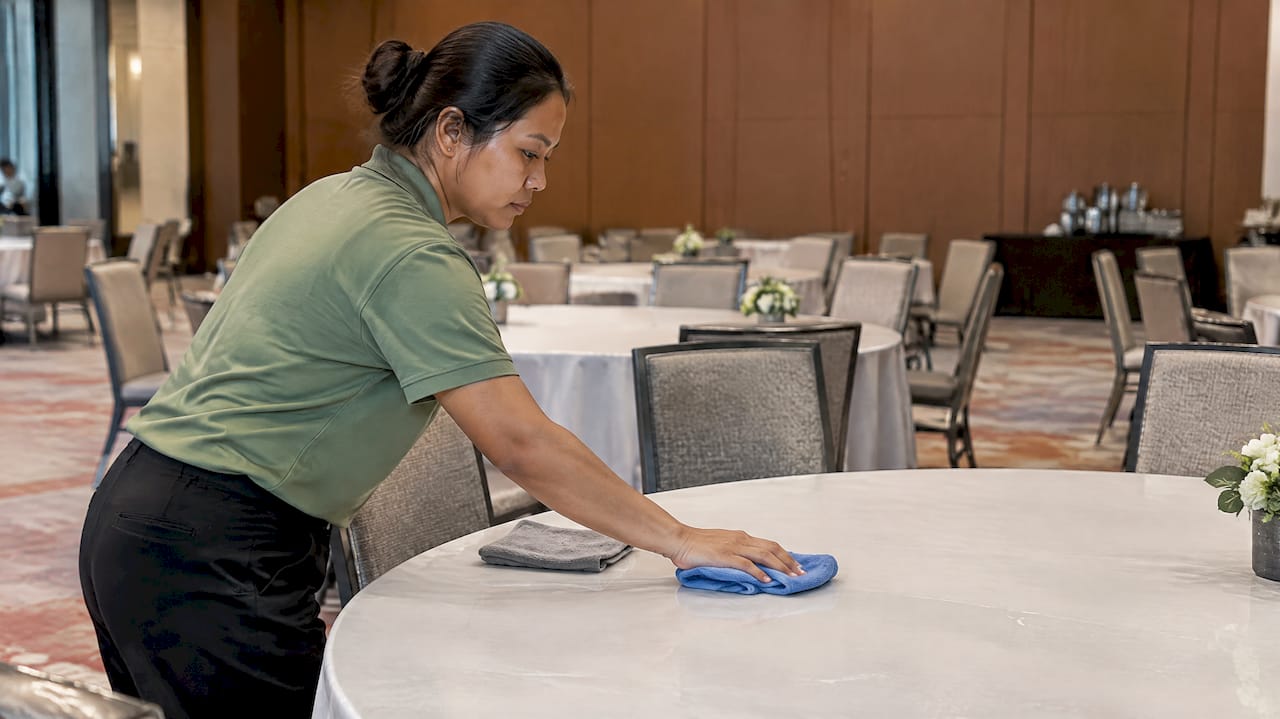
Event furniture is clean enough when every surface guests touch has been wiped with a method that suits its material, spills are dealt with the moment they happen, and nothing is put away or returned damp. In Singapore, humidity makes that last point matter more than most planners expect. This guide covers what to do before, during and after an event, how to treat chairs, tables and upholstery, what the rules actually say, and how to plan the work so it does not eat into your build time.
For most events, furniture cleaning is not a deep-clean job. It is three short routines at three points in time:
The work is easy to underestimate because the furniture often arrives looking fine. The risk sits in the details: a sticky cocktail ring on a bar table, a coffee splash on a pale sofa at 9 pm, a chair packed away with a damp seat. Each is a small job when caught early and a larger one when it is not.
If you are still working out how the furniture fits into your timeline, our event carpet and furniture setup guide for Singapore planners explains the order in which floors, carpet and furniture normally go in, which also determines when cleaning can happen.
NEA’s guidelines for cleaning and disinfecting non-healthcare premises, first released on 13 September 2024, set out a sequence that works well at events too: contain general waste, then clean hard surfaces, then dishes, then upholstered furnishings, then floors and carpet, and only then dispose of waste. The logic is simple. Dirt and contamination move downward and outward, so you clean the cleanest and most-touched items first and the floor last. Working in the opposite direction drags dust and residue back onto surfaces you have just finished.
For a typical event hall, that translates to:
The same order suits a pre-event pass, although there is less to clear. If the furniture will be delivered into a venue that is still being cleaned, ask the venue team to finish floors before the furniture goes in so you are not moving it twice.
Not every product suits every finish. A cleaner that is fine on a laminate tabletop can cloud a lacquered surface or fade a fabric. The table below summarises widely published manufacturer care guidance. Always defer to the care label or instructions that apply to the specific piece.
| Material | Routine method | Avoid |
|---|---|---|
| Wood-based tops and frames | Wipe with a soft, damp microfibre cloth; add mild soap or diluted neutral detergent if needed; dry immediately | Strong solvents, alcohol-based cleaners, abrasive sponges |
| Fabric or mesh upholstery | Vacuum with a brush attachment; blot spills straight away with a fabric-safe cleaner | Rubbing, oversaturating, heat |
| PU leather and vinyl | Wipe with a damp cloth and mild soap; a disinfectant formulated for vinyl or PU where disinfection is needed | Alcohol or oil-based solutions |
| Real leather | Wipe with a slightly damp cloth, dry at once, blot spills with an absorbent white cloth | Soaking, harsh chemicals |
| Metal and non-cloth hard surfaces | Wipe with disinfectant at the correct contact time, rinse with a clean damp cloth, air dry | Leaving residue on the surface |
Most cocktail tables, dining tables and counters used at events have wood-based or laminated tops. Local furniture manufacturers advise a soft damp microfibre cloth, with mild soap or a diluted neutral detergent only if needed, followed by immediate drying. Standing water is the enemy, especially on edges and joints. Solvents, alcohol-based cleaners and abrasive sponges dull finishes and can strip them.
For bar tables, wipe in the direction of any visible grain or finish pattern and dry straight away. If you are hosting a networking evening where drinks go down on every surface, keep a dry cloth with the damp one so no table is left wet.
For fabric or mesh upholstery, vacuum first so grit does not turn into paste when you add moisture. Blot spills immediately, working from the outside edge toward the middle so the stain does not spread. Commercial care guidance generally recommends a vacuum with an upholstery brush attachment on a regular schedule and professional deep cleaning at least once a year for furniture in constant use.

Textile manufacturers often label fabrics with cleaning codes. Code W fabrics are spot cleaned with foam from water-based cleaners, code S fabrics with a mild solvent or upholstery shampoo, and code WS fabrics with either. Two rules apply whatever the code: test the cleaner in a hidden spot first, and never use heat, because heat can set a stain permanently. Wipe away every trace of cleaner or disinfectant afterwards, since residue can cause fading or degrade the material.
Lounge furniture is where guests sit longest and where drinks are most likely to tip. PU leather wipes down with a damp cloth and mild soap. Keep alcohol and oil-based products away from it. For genuine leather, wipe with a slightly damp cloth, dry it immediately, and blot spills with a white absorbent cloth so no dye transfers. Oil and grease marks respond to baking soda or cornstarch left to absorb before brushing off.
If you are planning a VIP or sponsor lounge, think about this at selection stage. Our VIP lounge range and sofas and love seats let you compare finishes before you commit, and a wipe-friendly surface makes a long evening easier to manage.
Hard-surface chairs are the simplest to maintain. For non-cloth tables and chairs, arm rests and other frequently touched points, NEA’s guidance is to soak a cloth in prepared disinfectant, leave it for the manufacturer’s recommended contact time, wipe again with a clean wet cloth and let the surface air dry. Contact time is the step people skip. A disinfectant wiped off in two seconds has not done its job.
NEA names diluted bleach and alcohol-based products with at least 70% alcohol as appropriate disinfectants for hard surfaces. Follow the manufacturer’s directions for dilution and contact time, use the right tools, and wear the protective equipment listed on the product’s Safety Data Sheet where needed.
A few practical points follow from that:
Some manufacturers publish fabric-specific disinfection routines, for example bleach diluted 1:10 with a ten-minute wet contact time for olefin fabrics, or hydrogen peroxide products for polyester. These are specific to those fabrics and brands, so treat them as examples of why you must read the label rather than as a universal recipe.
Speed matters more than product. Blot, do not rub. Use several light applications of a mild cleaning solution rather than one heavy soaking, work in a ventilated area, and let the fabric dry without heat. Keep a small kit on site: microfibre cloths, a white absorbent cloth, a spray bottle of mild soap solution, gloves, and a handheld vacuum if the event is long.
For fabric, blot from the outside in. For oil or grease on leather, cover with baking soda or cornstarch and allow it to absorb. On pale sofas, mark the piece and tell the setup team at teardown, so any stain is recorded while the event details are fresh.
Vomit, blood and other bodily discharge need a different response. NEA’s incident response guidance calls for the area to be cordoned off with a minimum radius of 3 metres, and for disinfectant prepared as one part bleach to nine parts water (5,000 ppm) unless the manufacturer’s recommendations say otherwise. For contaminated carpets, cushions or mattresses, NEA’s code of practice says a cleaning contractor should be arranged as soon as possible, and the affected item should not be used until cleaning and disinfection is complete. Carpets and rugs soiled by bodily fluids should be wet-vacuumed and steam cleaned, not hung up and beaten.

For a planner, the practical takeaway is to decide in advance who has authority to take a piece of furniture out of use, and where it will go. Do not leave that decision to the middle of a gala dinner.
People searching for event furniture cleaning standards usually want to know whether there is a specific rulebook. There is no standard written only for event furniture. What exists is a mix of legal duties and voluntary standards.
Legal duties. Under the Environmental Public Health Act, owners and operators of premises must keep them clean and sanitary. NEA’s Code of Practice for Environmental Control Officers (Specified Premises) requires thorough periodic cleaning and disinfection at least six-monthly for specified premises, with a minimum of 10% of areas visually inspected daily and after periodic cleaning works. That duty sits primarily with venue owners and operators, so ask your venue what its schedule and arrangements cover.
Licensing. Businesses that provide cleaning services in Singapore need a valid Cleaning Business Licence from NEA, and from 1 January 2024 licences are granted in three classes. If you hire an outside cleaning contractor for an event, this is the first thing worth confirming.
Voluntary standards. SS 694:2023 is the Singapore Standard for measuring cleaning performance in commercial premises, including offices, shopping complexes, hotels and educational institutions. It covers inspection methods and refers to ATP testing as a way to measure cleanliness. Singapore Standards are voluntary unless a regulatory authority makes them mandatory, and following one does not remove your legal obligations. Treat SS 694 as a benchmark that a venue or contractor may use, not as an event-furniture requirement.
Fire and safety are a separate matter. Furniture layouts and materials can be checked by authorities regardless of how clean the pieces are, and our event furniture compliance checklist for Singapore covers that side.
Humidity is the local factor most guides ignore. Singapore’s relative humidity often sits above 80%, and mould prevention advice puts the target for indoor spaces below 60% and ideally near 50%, using dehumidifiers, air-conditioning in dry mode and ventilation. Damp upholstery packed into a closed truck or storeroom is a classic way to get musty smells and spotting.
The habits that prevent it:
Those storage figures come from collections-care guidance, which is stricter than an event needs, but the principle holds: dry, off the floor, unstacked where practical, away from sun.
Use this as a one-page brief for your onsite team.
This fits comfortably into the extra time that good teardown planning builds in. If your event runs late, the timing of teardown also affects cost: our delivery, setup and teardown fees differ for office hours, after office hours and night shift hours, so build that into your schedule early.
Cleaning effort begins at selection. Some choices that reduce it:
If your brief also covers sustainability, our sustainable furniture collection is worth a look alongside the practical choices above.
Events Partner is a Singapore event furniture rental partner for corporate events, conferences, exhibitions, roadshows, launches, weddings and gala dinners. Our rentals include delivery, setup and collection, and our team can help with space planning and styling so the layout works for your guests and your teardown crew.
To see what is available and request a quotation, browse our event furniture rental range, or read how event furniture rental makes planning easier.

If you tell us the event type, guest count, venue and timings, we can recommend suitable pieces and set out the delivery and setup arrangements. Start from our Singapore event furniture rental page and send your brief through the quotation route.
Wipe touch points before guests arrive and again at natural breaks for long events. Clean spills the moment they happen, and do a full wipe-down at teardown. Upholstery in constant use benefits from regular vacuuming, with a professional deep clean at least once a year according to commercial care guidance.
No standard is written only for event furniture. Premises owners must keep premises clean and sanitary under the Environmental Public Health Act, and NEA publishes cleaning and disinfecting guidelines. SS 694:2023 measures cleaning performance in commercial premises and is voluntary unless a regulator makes it mandatory.
No. NEA names diluted bleach and alcohol-based products with at least 70% alcohol as appropriate for hard surfaces, with the manufacturer’s contact time observed. Alcohol should be kept away from PU leather and wood finishes, and bleach is corrosive to metal and skin. Follow the care instructions for the specific material.
Cordon off the area, with a minimum 3-metre radius in NEA’s incident response guidance, and take the item out of use. NEA advises arranging a cleaning contractor as soon as possible for contaminated carpets and cushions, and steam cleaning for carpets soiled by bodily fluids.
Usually because it was stored or packed while still damp. Singapore’s humidity often exceeds 80%, and mould prevention advice targets indoor humidity below 60%. Dry every piece fully, keep air moving and avoid stacking damp items.
#EventFurnitureRental #SingaporeEvents #EventPlanning #EventLogistics #CorporateEvents



 Delivery Fees
 Payment Methods
 FAQ